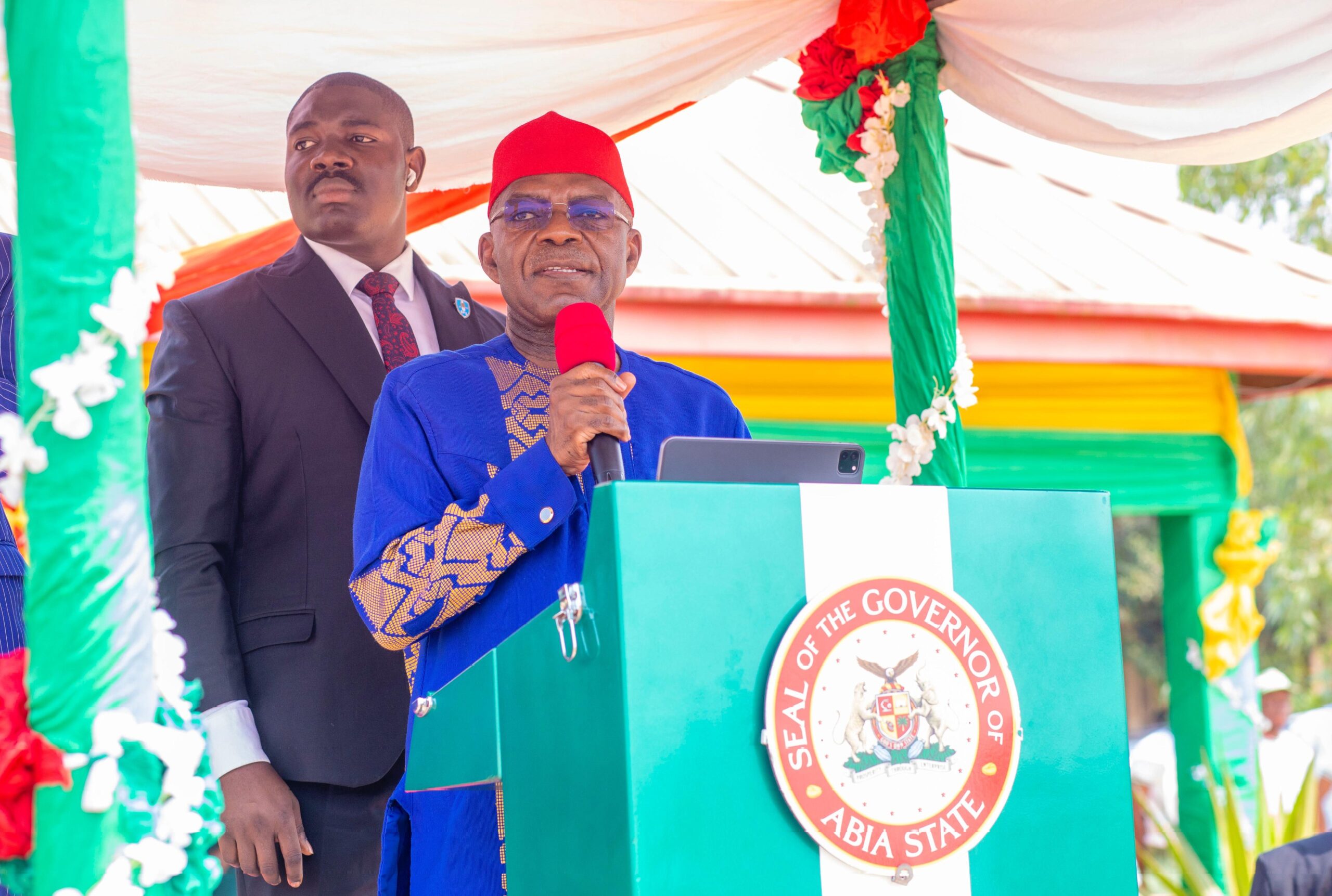
The Governor of Abia State, Alex Otti, has revealed that his administration is preparing to sign a $200 million Memorandum of Understanding with Presco Plc to develop large-scale palm oil plantations and processing facilities in the state.
Governor Otti disclosed this on Friday while receiving a delegation from the company at his country home office in Nvosi, located in Isialangwa South Local Government Area. The delegation was led by the chairman of Presco Plc, Olakanmi Rasheed Sarumi, who visited the state to advance discussions on the proposed investment.
According to the governor, the next phase of the partnership will involve drafting and signing a formal Memorandum of Understanding between the Abia State Government and Presco Plc, which will serve as the official framework guiding the collaboration before the project is fully launched.
Otti described the proposed investment as a major step toward reviving Abia’s agricultural sector and repositioning the state as a leading producer of palm oil in Nigeria. He noted that agriculture remains one of the most effective avenues for economic growth, job creation, and sustainable development in the country.
The governor highlighted the rich agricultural heritage of Abia and the wider southeastern region, recalling the era when oil palm production served as a key pillar of the regional economy.
“In principle, we are in agreement with you,” Otti told the visiting delegation. “I am happy that you went back to history, to the days of Dr. Michael Okpara, who actually set up these farm settlements in the southeast.”
He was referring to Michael Okpara, whose agricultural policies in the 1960s transformed the Eastern Region into one of the most productive agricultural zones in Africa through the establishment of farm settlements and large-scale agricultural estates.
Otti said the proposed palm plantation project would draw inspiration from that legacy while incorporating modern agricultural practices and private sector investment.
According to the governor, the project could begin with the development of a 14,000-hectare oil palm plantation across selected parts of the state. He described this as an initial phase that could expand significantly in the future depending on the success of the first stage.
“I think it is a good way to start,” Otti said. “I believe that 14,000 hectares may just be for starters, because like you rightly observed, we have the topography and we are blessed with the quality of land that would give you one of the highest yields.”
He emphasised that Abia’s favourable climate, fertile soil, and suitable terrain make it ideal for large-scale agricultural investments such as oil palm cultivation.
Governor Otti also assured the investors that the Abia State Government would play an active role in facilitating the success of the project. He pledged the government’s support in helping the company secure the required land for the plantation as well as providing adequate security to protect the investment.
The governor noted that the state maintains a long-standing policy of ensuring that host communities benefit from major development projects through appropriate compensation and engagement.
According to him, ensuring that local communities feel included in the development process is critical to achieving peaceful and sustainable project implementation.
He commended Presco Plc for conducting detailed due diligence before presenting its proposal to the state government, adding that the administration is committed to transparent partnerships that deliver real value for the people of Abia.
Earlier in his remarks, Presco Plc Chairman Olakanmi Rasheed Sarumi explained that the company’s visit to the state was part of ongoing efforts to explore opportunities to expand its operations into Abia.
Sarumi disclosed that the company intends to invest approximately $200 million in the development of palm oil plantations and processing facilities within the state.
He said the proposed investment would not only increase palm oil production but also position Abia as a major palm oil processing hub in southeastern Nigeria.
Palm oil is widely used in various industries, including food production, cosmetics, pharmaceuticals, and biofuel manufacturing. Sarumi noted that the wide industrial applications of crude palm oil make it a strategic agricultural commodity with strong potential for economic growth.
According to him, the project would stimulate the growth of several downstream industries that depend on palm oil as a raw material.
Sarumi described the proposed investment as a modern continuation of the agricultural transformation initiated decades ago by former Eastern Region Premier Michael Okpara.
Under Okpara’s leadership, large farm settlement programmes were established across the region, significantly boosting agricultural output and rural development.
Sarumi said Presco Plc’s initiative seeks to revive that legacy while introducing modern plantation management techniques and processing technologies.
He added that the project is expected to generate more than 5,000 direct and indirect jobs across multiple sectors.
These employment opportunities would include plantation operations, palm oil milling, logistics services, equipment maintenance, transportation, and other support activities within the agricultural value chain.
According to Sarumi, the initiative will create employment opportunities for thousands of young people in the state and reduce rural-urban migration by providing viable economic opportunities within local communities.
He further disclosed that the company had already identified three potential locations in Abia State for the proposed plantation development. The areas under consideration include Ozuitem, Abam, and Ulonna.
Sarumi explained that the final selection of the plantation site would depend on further assessments of land availability, soil quality, and environmental considerations.
He added that the investment aligns with the Abia State Government’s broader economic vision to transform the state into one of Nigeria’s leading industrial plantation clusters within the next decade.
According to him, once the project becomes fully operational, it could contribute billions of naira annually to the state’s Gross Domestic Product through agricultural production, tax revenues, and the expansion of small and medium-scale enterprises that depend on palm oil processing and distribution.
“Our task from you and the state is to have this mutually beneficial relationship and facilitate the land acquisition for Presco Plc, as well as security support, to realise this development,” Sarumi said.
“Our investment here will add multi-billion naira annually to Abia State’s GDP through agricultural output, tax revenues and multiplier effects across SMEs and local value chains.”
Also speaking during the visit, the Group Managing Director of Afrinvest, Ike Chioke, commended Governor Otti for insisting on a comprehensive evaluation process before entering into the partnership.
Chioke explained that the current engagement followed earlier discussions between the Abia State Government and Presco Plc that began in the first quarter of 2025 under the state’s Public-Private Partnership framework.
He said the delegation’s visit was also an opportunity to appreciate the governor’s commitment to due diligence and transparency in negotiating the proposed investment.
Observers say the project could mark a significant turning point for agriculture in Abia State if successfully implemented.
Palm oil production once played a central role in Nigeria’s economy, particularly in the southeastern region, before the discovery and expansion of crude oil production shifted national economic priorities.
During the administration of Michael Okpara in the old Eastern Region, large-scale agricultural programmes helped transform rural communities and made the region a leading exporter of palm produce.
However, over the years, the sector declined due to declining public investment, aging plantations, and increased national reliance on petroleum revenues.
Analysts believe that renewed investment in oil palm agriculture could help diversify Nigeria’s economy, create employment opportunities, and restore the region’s historic reputation as a global centre for palm oil production.
If completed, the proposed partnership between the Abia State Government and Presco Plc could therefore serve as a major step toward reviving that legacy while building a modern agricultural economy capable of supporting long-term development in the state.