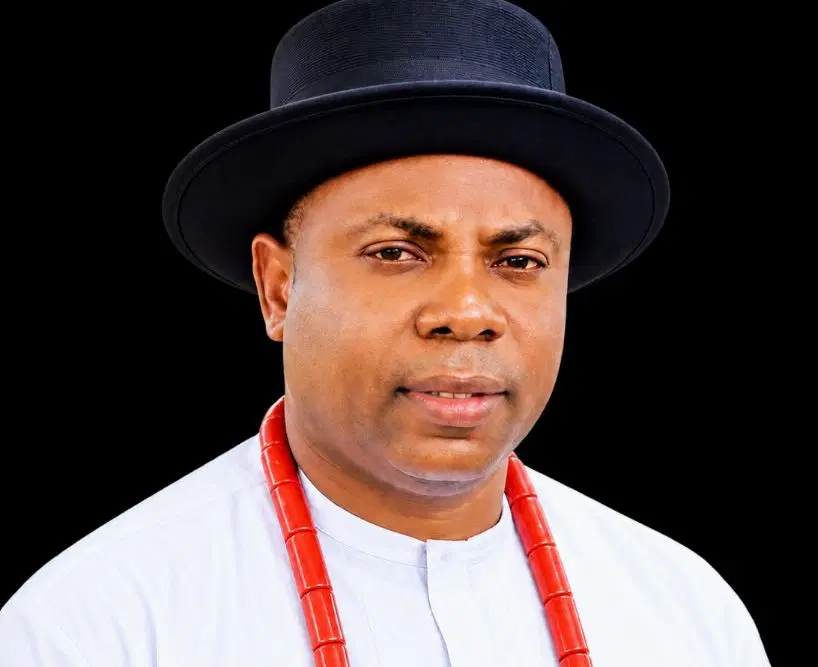
Orette reportedly died in Houston, Texas, United States, leaving behind a legacy spanning decades of medical practice and public engagement in Nigeria’s political development.
Reacting to the news on Saturday morning, Ebireri described the loss as devastating, paying tribute to Orette’s honesty, courage and commitment to reform.
“I’m devastated. Austin Orette’s death leaves me cold,” Ebireri said in a statement.
Born in Owhelogbo, Isoko North Local Government Area of Delta State, Orette spent several decades practising medicine in Nigeria and the United States before becoming increasingly involved in Nigerian politics.
He obtained his medical degree from the University of Nigeria College of Medicine, Enugu, in 1985 before relocating to the United States, where he completed his Family Medicine Residency at Memorial Hermann Health System in Houston between 1992 and 1995.
Orette subsequently built a medical career in Houston spanning family medicine, emergency medicine and chronic disease management. He maintained an active Texas State Medical License and was affiliated with medical institutions, including Altus Baytown Hospital and Cleveland Emergency Hospital.
Beyond medicine, Orette developed a reputation as a political commentator and reform advocate, publishing opinion articles on national security, governance and economic policy. His interventions reflected his interest in institutional accountability, constitutional reform and the development of Nigeria’s political system.
Political Journey and Reform Agenda
Orette’s political journey included membership of the All Progressives Congress (APC), which he helped establish in Delta State. He later moved to the Nigeria Democratic Congress (NDC) in early 2026, reportedly citing concerns about undemocratic practices.
He subsequently resigned from the NDC amid disputes over party primaries and joined the African Democratic Congress (ADC), under which he secured his ticket to contest the Delta South senatorial seat.
His campaign was built around what he described as an ideas-driven approach to politics, with an emphasis on grassroots development rather than political patronage.
Orette’s manifesto addressed several areas, including constitutional reform, healthcare delivery, education, digital access, youth empowerment, agriculture and food security.
On governance, he advocated fiscal restructuring and the decentralisation of powers from Abuja, arguing that communities in the Niger Delta should exercise greater control over their resources and development priorities.
Healthcare reform was another major focus of his proposed agenda. He promised to develop rural healthcare networks, expand community health worker programmes and address the practice of government officials travelling abroad for medical treatment.
In education, he proposed establishing local digital libraries, providing modernisation funds for public schools and creating vocational training centres to equip young people and artisans with practical skills.
His economic development proposals included low-interest loan schemes and regional enterprise zones intended to help young people establish businesses and expand employment opportunities.
For agriculture, Orette advocated investment in mechanised farming equipment, local food storage facilities and flood-control infrastructure to improve agricultural productivity and protect farming communities across Delta South.
Legal Challenge Over Election Candidacy
Shortly before his death, Orette reportedly instituted a suit at the Federal High Court in Abuja against the Independent National Electoral Commission (INEC), seeking ₦1 billion in punitive damages over the alleged omission of his name from the final list of candidates for the January 16, 2027 election.
According to the information provided, he maintained that he had won the ADC direct primary with 10,950 votes but was subsequently excluded from the published list of candidates.
The outcome of the legal dispute was not stated in the available account.
A Loss to Medicine and Public Life
Orette’s death represents a loss to those who knew him through his medical career, political engagements and advocacy for governance reform.
Ebireri’s tribute highlighted the late physician’s honesty and bravery, qualities he considered central to Orette’s public service and political aspirations.
Although Orette’s bid for the Senate was focused on a range of reforms affecting Delta South and Nigeria more broadly, his career also reflected a professional journey that connected medical practice in the United States with an ambition to contribute to public policy and development at home.
Further details surrounding his death, including the circumstances and funeral arrangements, were not provided in the available statement.