United States President Donald Trump has intensified his criticism of major American media organisations over their reporting on the 2025 U.S. airstrikes on Iranian nuclear facilities, accusing them of undermining the military’s achievements and misrepresenting the outcome of the conflict.
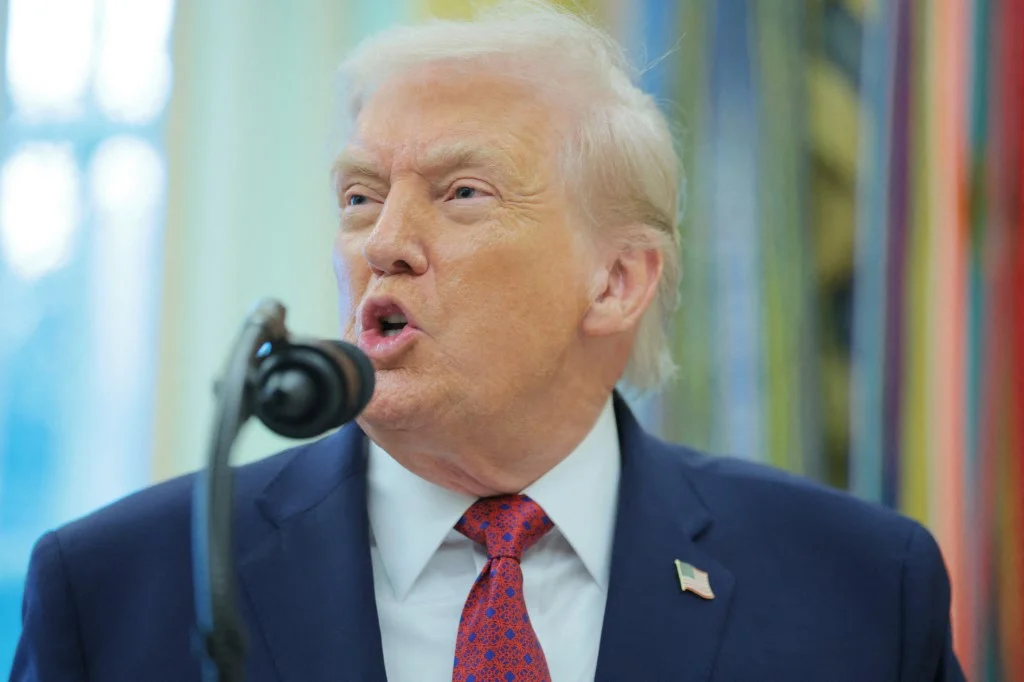
In a series of posts shared on his Truth Social platform on Tuesday, the president forcefully defended the operation—code-named “Operation Midnight Hammer”—which targeted what he described as Iran’s nuclear infrastructure. The remarks were subsequently amplified across official U.S. government social media channels, further escalating the ongoing confrontation between the White House and the press.
According to Trump, the military campaign was a decisive and overwhelming success. He described the strike as having completely destroyed the targeted facilities, dismissing any suggestion that the operation had limited or inconclusive results.
“Operation Midnight Hammer was a complete and total obliteration of the nuclear sites in Iran,” the president stated. “Any effort to recover or rebuild will be a long and difficult process.”
The operation, carried out in 2025, had drawn widespread international attention due to its strategic implications and the potential for escalation in the Middle East. While the U.S. administration has maintained that the strikes were necessary to curb Iran’s nuclear ambitions, critics—both domestic and international—have continued to question the proportionality, legality, and long-term consequences of the action.
In his latest comments, Trump turned his focus squarely on the American media, singling out outlets such as CNN for what he described as biased and unpatriotic reporting. He accused journalists of deliberately downplaying the success of U.S. forces and failing to give due recognition to military personnel involved in the operation.
“Fake News CNN and other corrupt media networks and platforms fail to give our great aviators the credit they deserve,” Trump wrote. “They are always trying to demean and belittle—losers!”
The president’s criticism extended beyond CNN to include other prominent publications such as The New York Times, The Wall Street Journal, and The Washington Post. He alleged that their reporting created a misleading narrative suggesting that the United States was losing ground in its confrontation with Iran.
In a separate post, Trump claimed that such coverage could have strategic consequences, arguing that adversaries might be influenced by what he termed “false reports” circulating in the media.
“The enemy is confused because they get these same media reports,” he wrote. “The anti-America fake news media is rooting for Iran to win, but it’s not going to happen, because I’m in charge.”
These remarks represent the latest chapter in a long-running and often contentious relationship between Trump and the U.S. media. Throughout his political career, he has frequently accused major news organisations of bias, misinformation, and acting against national interests—claims that media outlets have consistently rejected.
The renewed criticism comes against the backdrop of heightened geopolitical tensions following the 2025 strikes, which targeted Iranian nuclear facilities believed by U.S. intelligence to be part of a broader weapons development programme. The operation triggered sharp reactions from Tehran and raised concerns among global powers about the risk of a wider regional conflict.
Supporters of the administration have argued that the strikes demonstrated American military strength and resolve, potentially deterring further nuclear development by Iran. However, critics have warned that the action may have exacerbated tensions, undermined diplomatic efforts, and increased the likelihood of retaliatory measures.
Within the United States, the debate has also centred on the role of the media in reporting on military operations and national security issues. While some commentators have defended the press as fulfilling its duty to scrutinise government actions and provide balanced coverage, others have echoed the administration’s concerns about the tone and framing of certain reports.
Analysts note that the president’s rhetoric reflects a broader struggle over narrative control during times of conflict. Governments often seek to project strength and success, while independent media organisations aim to present a more nuanced or critical perspective. The tension between these objectives can become particularly pronounced in high-stakes geopolitical situations.
Despite the criticism, major media outlets have continued to report on the aftermath of the strikes, including assessments of damage, regional reactions, and the broader implications for international security. Many have cited intelligence sources, defence analysts, and diplomatic officials in their coverage, emphasising the complexity of the situation.
As the discourse continues, the clash between the Trump administration and the media appears unlikely to abate. The president’s latest statements suggest a continued willingness to confront what he perceives as hostile reporting, even as debates over the Iran strikes and their consequences remain unresolved.
For now, “Operation Midnight Hammer” remains both a focal point of U.S. foreign policy discussion and a flashpoint in the ongoing battle between political leadership and the press over how such actions should be interpreted and communicated to the public.