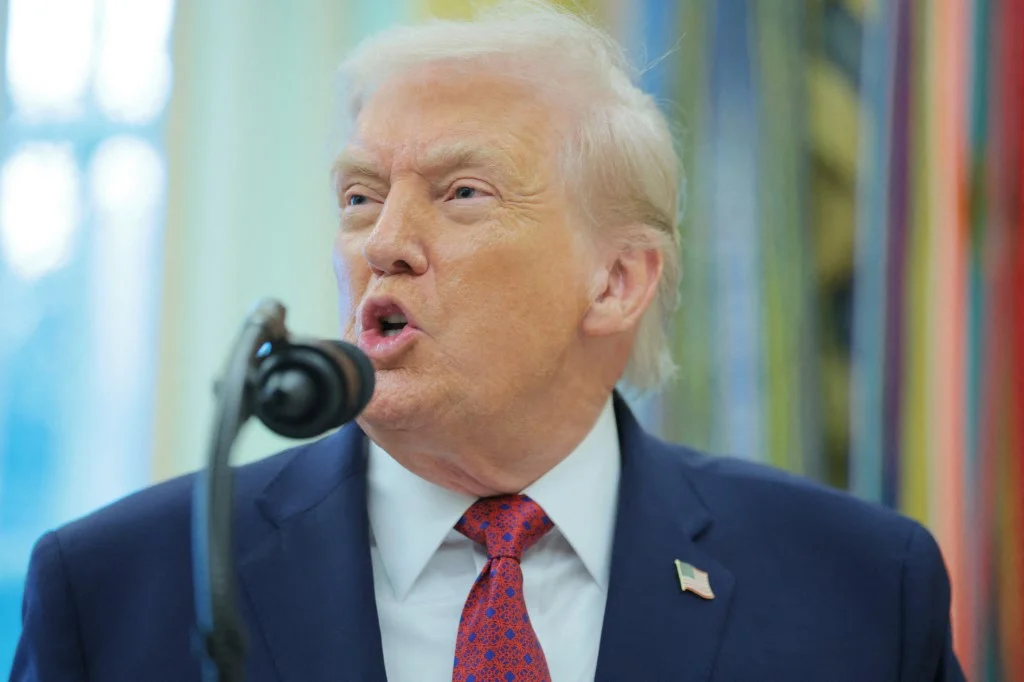
United States President Donald Trump has ignited fresh controversy in the already volatile Middle East landscape, issuing a series of sharp remarks directed at Iran amid ongoing geopolitical tensions and fragile ceasefire arrangements. His comments, delivered through his official Truth Social platform on Friday, have drawn widespread attention and concern from global observers monitoring the region’s stability.
In his statement, Trump adopted a confrontational tone, asserting that Iran’s current position on the global stage is tenuous and largely dependent on its willingness to engage in negotiations. “The Iranians don’t seem to realise they have no cards, other than a short-term extortion of the world by using international waterways,” he wrote. “The only reason they are alive today is to negotiate!”
The remarks come at a delicate moment, as both Washington and Tehran attempt to navigate a two-week ceasefire agreement intended to de-escalate hostilities and reopen the strategically vital Strait of Hormuz—a narrow but critical maritime corridor through which roughly one-fifth of the world’s oil supply passes.
Trump further accused Iran of failing to honour key aspects of the ceasefire deal, particularly those relating to the free flow of oil shipments through the strait. According to the US president, the reopening of the waterway was a central component of the agreement and a necessary condition for stabilising global energy markets.
“Iran is doing a very poor job, dishonourable some would say, of allowing oil to go through the Strait of Hormuz. That is not the agreement we have!” Trump declared, suggesting that Tehran’s actions could undermine the fragile truce and trigger renewed economic and diplomatic tensions.
He also issued a stern warning over reports that Iran may be imposing transit fees on vessels navigating the strait. “There are reports that Iran is charging fees to tankers going through the Hormuz Strait — they better not be and, if they are, they better stop now!” he added, signalling potential consequences if such practices continue.
These developments come amid growing evidence that shipping activity in the waterway remains severely disrupted despite the ceasefire announcement. Reports indicate that only a limited number of vessels have successfully navigated the strait in recent days, raising fears of a prolonged energy crisis with far-reaching global implications.
Further complicating the situation are claims that at least one private oil tanker operator allegedly paid as much as $2 million to Iranian authorities to secure safe passage through the strait. While these reports have not been independently verified, they have intensified concerns about the emergence of informal or coercive arrangements that could distort international shipping norms and increase operational risks for global energy companies.
Iranian officials, however, have pushed back strongly against the accusations emanating from Washington. The country’s Foreign Minister, Abbas Araghchi, accused the United States of undermining ongoing diplomatic efforts and exacerbating tensions in the region. In a pointed response, he suggested that US policies were contributing to instability rather than fostering peace.
“The United States is letting Israel kill diplomacy,” Araghchi stated, linking the current crisis to broader geopolitical dynamics involving Israel and its ongoing conflicts in the region.
He also referenced domestic political developments in Israel, specifically legal challenges facing Prime Minister Benjamin Netanyahu. According to Araghchi, a comprehensive regional ceasefire—including a halt to hostilities in Lebanon—could have significant implications for Netanyahu’s political future. “Netanyahu’s criminal trial resumes on Sunday. A region-wide ceasefire, including Lebanon, would hasten his jailing,” he remarked.
Araghchi further warned Washington against pursuing policies that could escalate the situation, cautioning that such actions might have serious economic consequences. “If the US wishes to crater its economy by letting Netanyahu kill diplomacy, that would ultimately be its choice. We think that would be dumb but are prepared for it,” he added, underscoring Iran’s readiness to respond to any escalation.
Meanwhile, Iran’s President, Masoud Pezeshkian, voiced strong condemnation of what he described as renewed Israeli aggression in Lebanon. He warned that continued hostilities could destabilise the region further and undermine any prospects for lasting peace.
“Renewed aggression by the Zionist regime against Lebanon blatantly violates the initial ceasefire,” Pezeshkian said, accusing Israel of acting in bad faith. He questioned the credibility of ongoing negotiations, arguing that such actions signal deception and a lack of commitment to diplomatic agreements.
Reaffirming Iran’s position, Pezeshkian emphasised the country’s continued support for its regional allies. “Our hands remain on the trigger. Iran will never forsake its Lebanese brothers and sisters,” he declared, a statement likely to heighten concerns about the potential for a broader regional conflict.
The escalating exchange of rhetoric between Washington and Tehran has coincided with renewed hostilities along the Israel-Lebanon border, further complicating an already volatile security environment. Analysts warn that the convergence of military tensions, political rivalries, and economic pressures could create conditions for a wider confrontation involving multiple actors across the Middle East.
Despite the mounting tensions, there has been no immediate official response from Israeli authorities to the latest statements from Iranian leaders. However, international observers continue to monitor the situation closely, with growing calls from global stakeholders for restraint and renewed diplomatic engagement.
As the ceasefire enters a critical phase, the focus remains on whether both sides can uphold their commitments and prevent further escalation. The future of the Strait of Hormuz, global energy stability, and broader regional peace may depend on the outcome of these high-stakes negotiations.
For now, the situation remains fluid, with uncertainty hanging over the Middle East as world leaders weigh their next moves in a rapidly evolving geopolitical landscape.