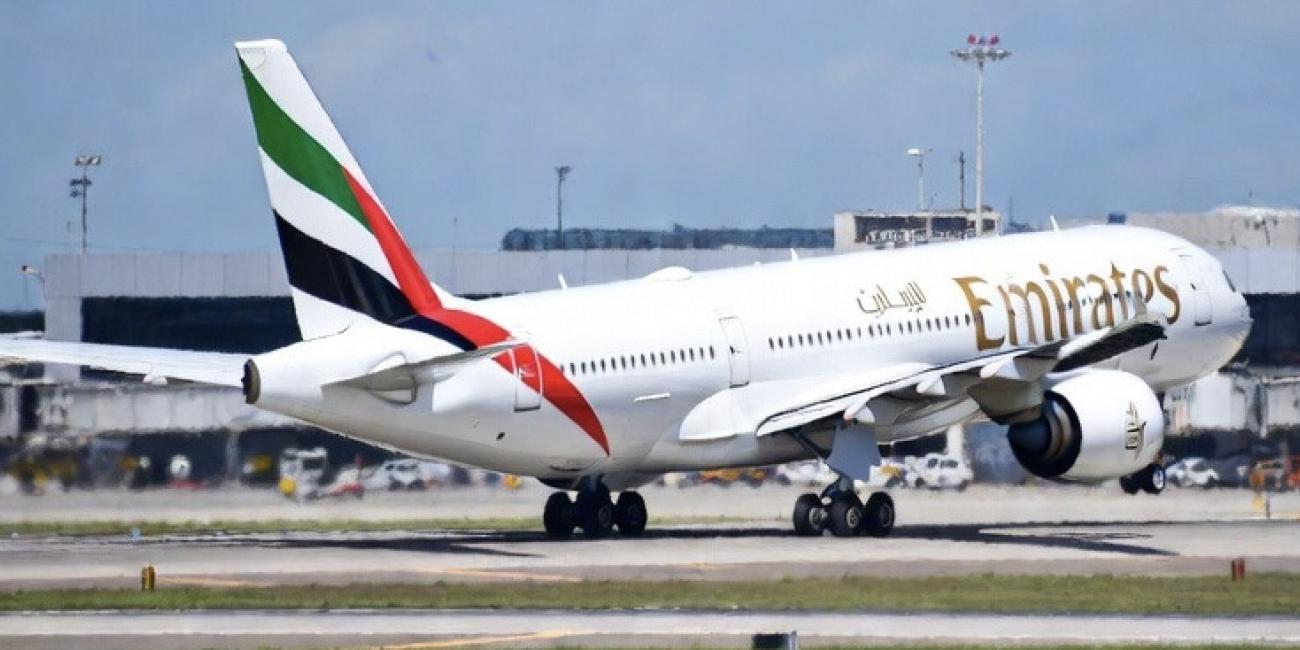
Emirates has announced the suspension of all flights to and from Dubai until further notice, citing growing security concerns linked to escalating tensions across the Middle East. The airline disclosed the decision in an official statement released on Saturday, explaining that the temporary halt in operations was necessary to safeguard passengers, crew members and aircraft as the regional security situation continues to develop.
According to the Dubai-based carrier, the evolving conflict in parts of the Middle East has created significant safety uncertainties for aviation operations. As a result, the airline opted to suspend its services while monitoring developments in the region.
In the statement, the airline emphasised that the primary reason for the suspension was the safety of travellers and aviation personnel. Airline officials explained that unpredictable missile activity, airspace restrictions and the risk of military escalation in several countries had made it difficult to guarantee safe flight operations in and out of Dubai.
Passengers scheduled to travel through Dubai were advised not to proceed to the airport while the suspension remains in effect. Emirates noted that the situation is being monitored closely in coordination with aviation authorities and security agencies, and that further updates would be communicated as soon as clearer information becomes available.
The airline also urged travellers with existing bookings to regularly check official communication channels for updates regarding their flights. Customers were encouraged to contact the airline’s customer service teams for information about rebooking options, refunds or alternative travel arrangements.
The suspension of Emirates flights has generated widespread disruption for passengers travelling through Dubai, one of the world’s busiest aviation hubs. Dubai serves as a critical connecting point for millions of travellers moving between Europe, Asia, Africa, the Americas and Australia.
As one of the largest global airlines, Emirates operates thousands of flights every week to destinations spanning six continents. The sudden suspension of these services has therefore affected not only travellers flying directly to Dubai but also those using the city as a transit point for onward journeys to other international destinations.
Industry analysts say the move reflects growing concern within the aviation sector about the safety risks associated with the escalating conflict across parts of the Middle East. Several airlines operating in the Gulf region have already begun rerouting flights or cancelling services due to the increasing dangers posed by missile activity and airspace closures.
In recent days, multiple countries in the region have restricted or temporarily closed portions of their airspace as military tensions intensify. Such measures are common during periods of conflict because aircraft flying through affected zones may be exposed to security threats.
Commercial airlines generally rely on safe and stable airspace corridors to operate efficiently, and the closure of major routes can force carriers to suspend operations or divert flights along longer, more expensive paths.
For Emirates, whose business model relies heavily on Dubai’s role as a global aviation hub, any disruption to airspace stability can have far-reaching operational consequences.
Authorities in the United Arab Emirates have not indicated when normal flight operations will resume. However, airline officials have assured passengers that services will restart once aviation safety experts and government authorities determine that conditions are secure.
The decision by Emirates came amid reports of fresh explosions and military activity in parts of the Middle East, including Iran’s capital.
Earlier reports indicated that a powerful explosion struck Mehrabad International Airport, one of the primary airports serving Tehran. The blast reportedly sent thick plumes of smoke into the sky and triggered widespread alarm among residents of the Iranian capital.
Eyewitnesses in western Tehran said they heard multiple loud explosions during the early hours of Saturday. According to residents, the blasts were followed by flames and heavy smoke rising from areas surrounding the airport.
Several videos circulating on social media appeared to show fires burning across parts of the airport grounds, while air-defence systems were reportedly activated in various locations across the city.
Preliminary reports suggested that the explosions might have been linked to a series of airstrikes targeting strategic sites within Tehran.
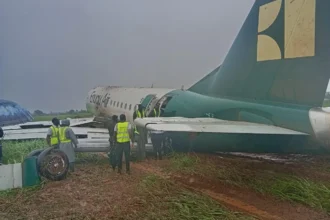
Some accounts indicated that aircraft parked on the tarmac at the airport were seen engulfed in flames after the blasts, though the exact scale of damage remained unclear at the time. Authorities had yet to release official information regarding potential casualties or the extent of destruction caused by the incident.
Israeli officials later confirmed that their forces had launched what they described as broad attacks against several high-priority targets in Tehran. The strikes, according to statements from Israeli sources, were part of a wider military operation targeting locations believed to be connected to Iran’s strategic infrastructure.
Iranian media outlets also confirmed that a significant explosion had occurred in the western part of Tehran. Residents reported hearing a series of powerful detonations that shook buildings and caused widespread concern among people living near the affected areas.
Mehrabad International Airport is considered one of the busiest aviation facilities in Iran and serves both civilian and military aviation activities. Because of its strategic significance, the airport has previously been affected during periods of military escalation involving regional actors.
Security analysts note that attacks on transportation infrastructure, particularly airports, often have broader implications for international travel because they disrupt flight networks and raise concerns about aviation safety.
The reported explosion in Tehran, combined with heightened military tensions across the region, has contributed to growing uncertainty within the global aviation industry.
Airlines typically respond to such situations by avoiding potentially dangerous airspace zones or suspending operations altogether until the security environment improves.
In addition to Emirates, several other international carriers have reportedly begun reviewing their flight schedules and routes in response to the unfolding situation.
Aviation experts say these precautionary measures are necessary because modern commercial aircraft can be vulnerable in areas where active military operations or missile launches are occurring.
As a result, airlines often rely on intelligence provided by aviation authorities, defence agencies and international regulators when determining whether certain airspace corridors remain safe for civilian flights.
The situation has also raised concerns among travellers who rely on Middle Eastern aviation hubs such as Dubai, Doha and Abu Dhabi for international connections.
Dubai, in particular, plays a crucial role in global aviation due to its strategic location between Europe, Asia and Africa.
Millions of passengers pass through Dubai each year, making any disruption to its aviation operations a matter of international significance.
For now, Emirates has reiterated that passenger safety remains its highest priority.
The airline stated that it will continue to assess developments in the region and work closely with relevant authorities before making any decision to resume flights.
Passengers affected by the suspension have been encouraged to remain patient while the airline evaluates the evolving situation.
Officials say further updates will be provided once the security environment becomes clearer and safe flight operations can be guaranteed.