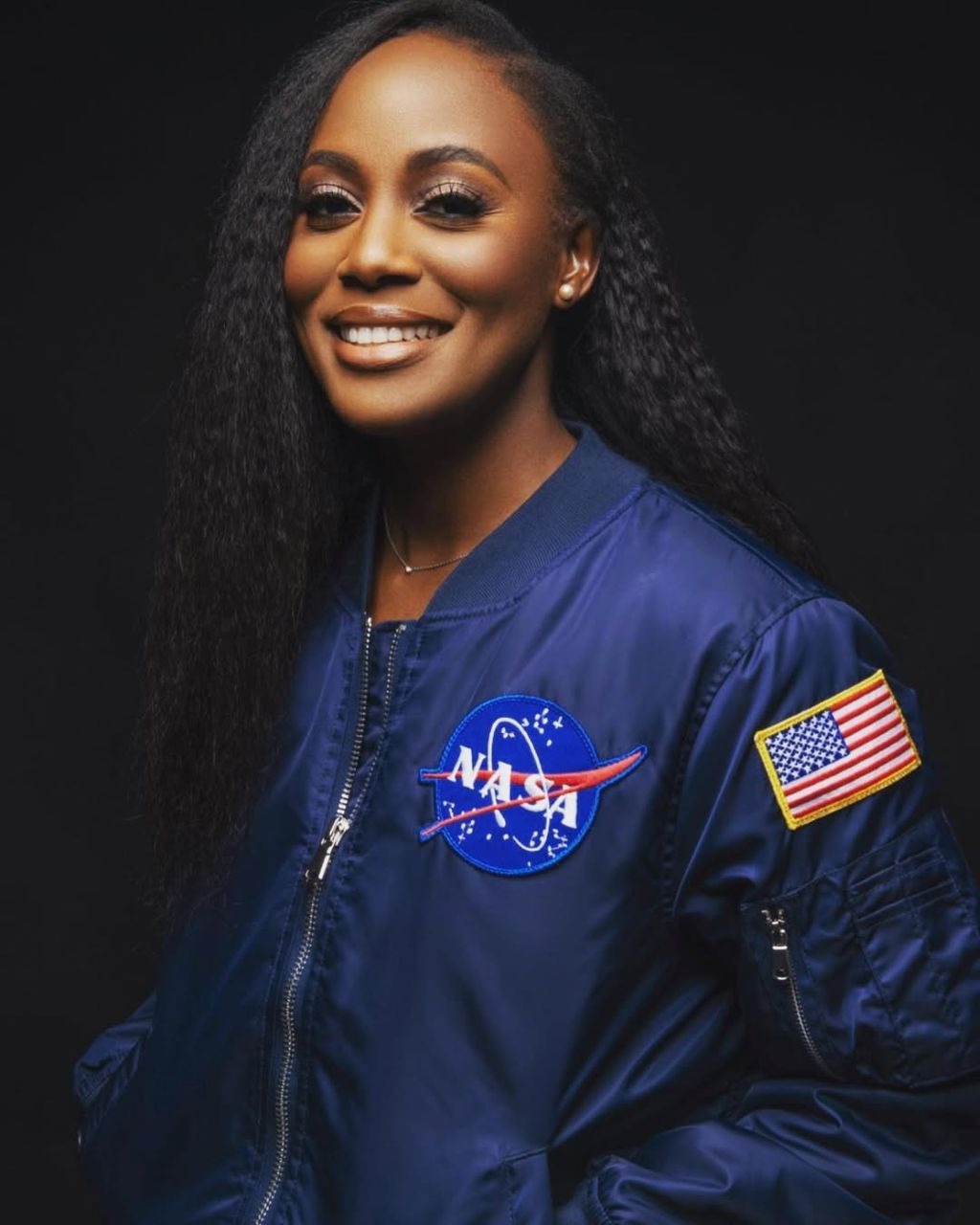
Nigerian-American aerospace engineer Dr. Wendy A. Okolo is redefining possibilities in science and engineering, emerging as a leading figure in flight safety and controls optimization at NASA’s Ames Research Center. Achieving her Ph.D. at just 26, Okolo’s journey reflects both exceptional academic rigor and a commitment to advancing aerospace technology on a global stage.
Currently serving as a research engineer at NASA Ames in California, Dr. Okolo focuses on developing advanced control systems designed to enhance aircraft performance, stability, and safety. Her work centers on flight controls optimization—an area critical to modern aviation, where precision algorithms and real-time system adjustments can mean the difference between routine operations and catastrophic failure.
Flight control systems govern how aircraft respond to pilot inputs and environmental conditions. Optimization in this domain involves designing mathematical models and control strategies that ensure aircraft maintain stability, efficiency, and resilience under varying conditions. At NASA Ames, a hub for cutting-edge aeronautics research, Okolo contributes to projects that explore how autonomous systems and advanced control theories can improve aviation safety.
Earning a doctoral degree at 26 is a milestone few achieve. For Okolo, it marked the culmination of years of intensive research and study in aerospace engineering. Her doctoral work laid the foundation for her expertise in dynamic systems and control theory, disciplines that underpin the development of reliable flight technologies.
Her career trajectory exemplifies the intersection of technical excellence and representation. As a Nigerian-American woman in aerospace engineering—a field historically dominated by men—Okolo stands as a visible symbol of progress and inclusion in STEM (Science, Technology, Engineering, and Mathematics). Her accomplishments have resonated strongly within both the Nigerian and broader African diaspora communities, where representation in high-technology sectors remains an ongoing challenge.
Beyond the technical intricacies of her research, Okolo’s role carries broader significance. NASA’s Ames Research Center is renowned for pioneering advancements in computational fluid dynamics, air traffic management systems, and autonomous flight technologies. Being part of such an institution places Okolo at the forefront of innovations shaping the future of aviation and space exploration.
Her research in controls optimization involves applying sophisticated mathematical frameworks to improve aircraft response and adaptability. In practice, this can include developing algorithms that adjust control surfaces in real time, enhancing maneuverability, and minimizing risks associated with turbulence, system faults, or pilot error. Such work not only improves safety but also contributes to fuel efficiency and operational sustainability.
Colleagues describe her as meticulous and forward-thinking, attributes essential in aerospace engineering where precision and reliability are paramount. The aerospace sector demands rigorous validation and testing protocols; even minor design flaws can have significant consequences. Okolo’s expertise in system modeling and analysis plays a key role in ensuring that flight control systems perform predictably under diverse operational scenarios.
Her journey into aerospace was shaped by an early fascination with flight and engineering principles. Encouraged by mentors and driven by intellectual curiosity, she pursued higher education in aerospace engineering with determination. The pathway to NASA is highly competitive, requiring not only academic distinction but also research innovation and technical leadership.
Dr. Okolo has also become an advocate for STEM education and mentorship. Recognizing the barriers that underrepresented groups often face in technical disciplines, she frequently emphasizes the importance of early exposure to science and mathematics. By sharing her story, she seeks to inspire young students—particularly girls and minorities—to envision themselves in advanced scientific careers.
In an era where aerospace technology is rapidly evolving to include autonomous aircraft, urban air mobility solutions, and next-generation space systems, experts like Okolo are shaping the trajectory of innovation. The integration of artificial intelligence with control systems, an area increasingly relevant to modern aerospace research, aligns closely with her work in optimizing performance and safety.
As global aviation continues to prioritize resilience, automation, and sustainability, research conducted at institutions like NASA Ames will play a central role in defining industry standards. Dr. Wendy A. Okolo’s contributions position her among the engineers helping to architect that future.
Her achievements underscore not only personal excellence but also the expanding diversity within high-level scientific research. In breaking barriers at NASA, she represents both the promise of global talent and the transformative impact of opportunity in STEM fields.
From earning a Ph.D. at 26 to leading advanced research at one of the world’s foremost aerospace institutions, Dr. Wendy A. Okolo’s career stands as a testament to ambition, expertise, and the boundless possibilities of scientific pursuit.