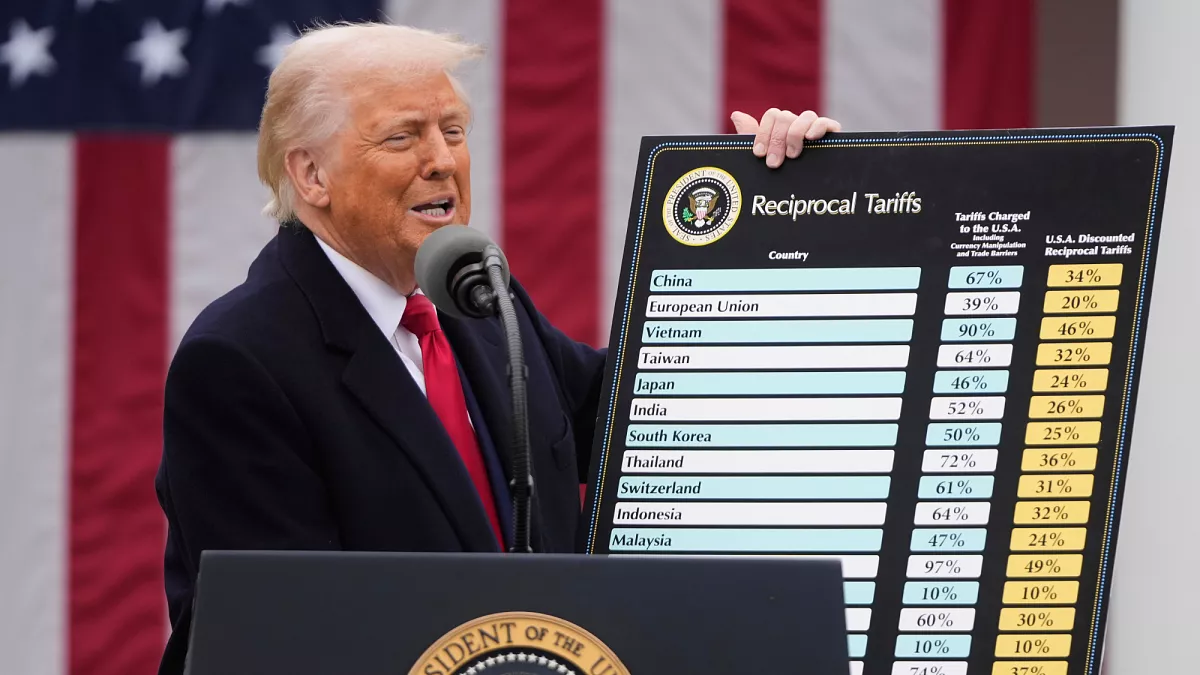
U.S. President Donald Trump on Friday announced the introduction of a temporary 10 percent global tariff that will remain in effect for up to 150 days, a move designed to replace sweeping emergency trade duties recently invalidated by the Supreme Court of the United States.
The new measure, unveiled during a White House press briefing, will be implemented under Section 122 of the Trade Act of 1974. According to the administration, the tariff will apply in addition to existing duties and is intended as a stopgap mechanism to sustain the administration’s trade enforcement agenda while alternative legal strategies are pursued.
Standing alongside Commerce Secretary Howard Lutnick, U.S. Trade Representative Jamieson Greer, and Solicitor General D. John Sauer, Trump defended the decision and expressed confidence in the administration’s authority to continue imposing trade restrictions.
“We have alternatives, great alternatives,” Trump said. “We’ll take in more money and we’ll be a lot stronger for it.”
Section 122 of the Trade Act of 1974 grants the president limited authority to impose tariffs of up to 15 percent for a maximum of 150 days in response to significant balance-of-payments deficits or to prevent serious harm to the U.S. economy. Unlike other trade enforcement tools, the provision does not require lengthy investigative procedures or formal findings before duties can be imposed, making it one of the more flexible options available to the executive branch.
The announcement comes on the heels of a major legal setback for the administration. Earlier this week, the Supreme Court struck down Trump’s broad global tariffs that had been issued under the International Emergency Economic Powers Act (IEEPA). In its ruling, the court determined that the president had exceeded the statutory authority granted under IEEPA, which is traditionally used to address national security threats rather than broad trade imbalances.
The invalidated tariffs had formed a cornerstone of Trump’s aggressive trade strategy, targeting a wide range of imports with the stated aim of correcting trade deficits and pressuring foreign governments to adopt more favorable trade terms. The court’s decision effectively curtailed the administration’s use of emergency powers to reshape trade policy unilaterally.
By pivoting to Section 122 authority, the White House is seeking to preserve momentum in its trade agenda while staying within clearer statutory boundaries. However, the 150-day limit built into Section 122 means the newly announced 10 percent tariff is inherently temporary unless replaced by longer-term measures.
In addition to the interim tariff, Trump also announced the initiation of multiple Section 301 investigations into what he described as unfair trade practices by foreign governments and companies. Section 301 of the Trade Act of 1974 allows the United States Trade Representative to investigate and respond to foreign practices that are deemed discriminatory or unjustifiable and that burden U.S. commerce.
Unlike Section 122, Section 301 investigations are more procedurally intensive. They typically involve months of fact-finding, public comment periods, and consultations before any retaliatory tariffs or trade restrictions are imposed. As a result, while Section 301 actions can provide a more durable legal foundation for tariffs, they do not offer the immediate enforcement capability of Section 122.
Administration officials did not specify which countries or industries would be the focus of the new Section 301 probes but indicated that they would target longstanding trade grievances. The dual-track approach—immediate temporary tariffs under Section 122 combined with longer-term investigations under Section 301—signals an effort to maintain pressure on trading partners despite the Supreme Court’s recent ruling.
The move marks the latest chapter in Trump’s assertive trade policy, which has emphasized tariffs as both a revenue-generating tool and a negotiating lever. Critics argue that across-the-board tariffs risk increasing costs for American consumers and businesses, while supporters contend they are necessary to protect domestic industries and address chronic trade imbalances.
For now, the 10 percent global tariff will take effect under the 150-day statutory window permitted by Section 122. Whether it will be replaced by more permanent measures following the outcome of Section 301 investigations remains to be seen. What is clear is that the administration is determined to sustain its trade strategy, even as judicial scrutiny reshapes the legal framework within which it operates.