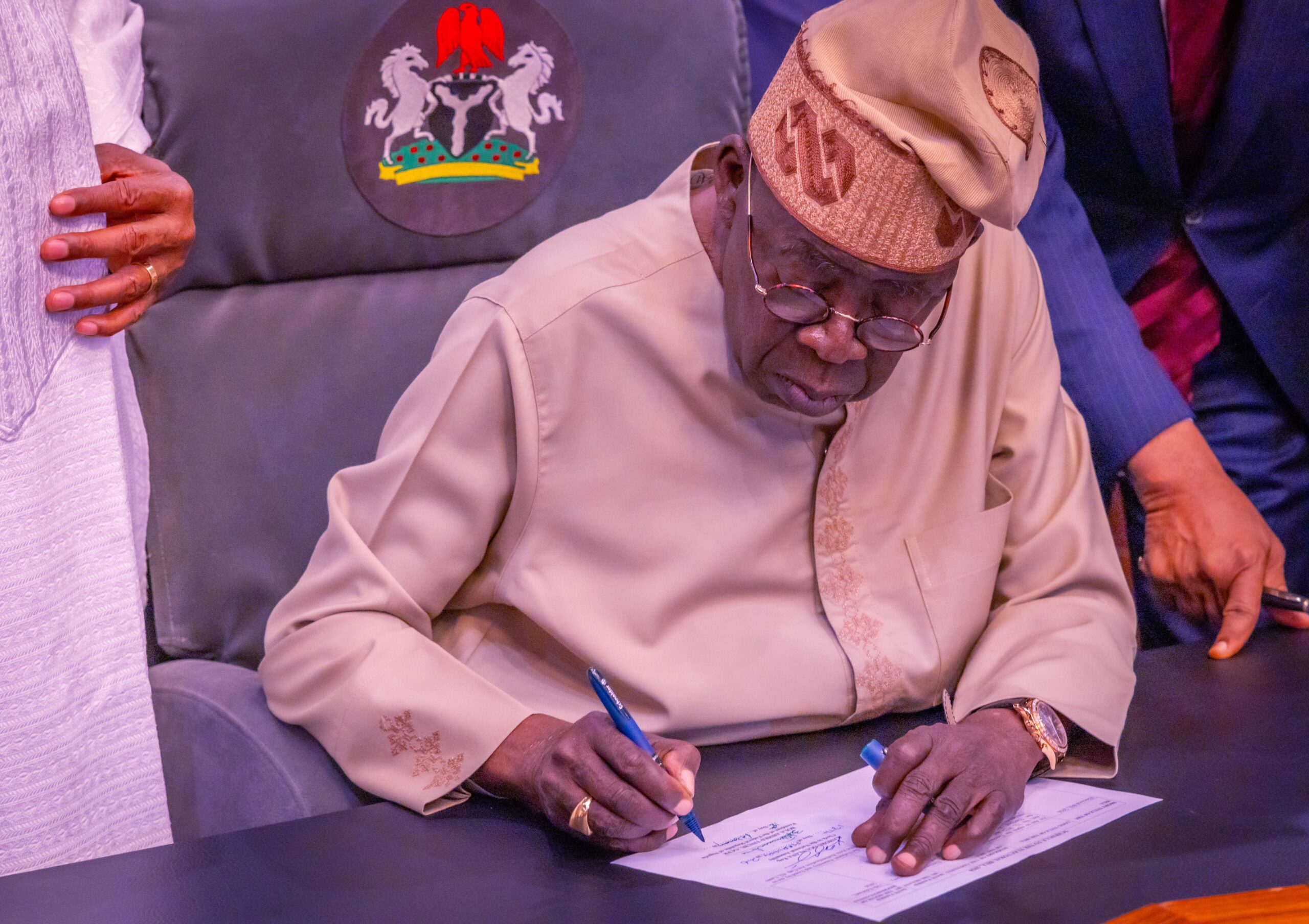
President Bola Ahmed Tinubu has signed a sweeping Executive Order aimed at overhauling the management of Nigeria’s oil and gas revenues, declaring an end to what he described as excessive deductions and structural distortions that have weakened remittances to the Federation Account.
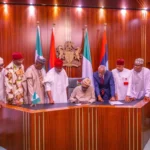
The directive, known as Order 9 of 2026 and formally titled the Presidential Executive Order to Safeguard Federation Oil and Gas Revenues and Provide Regulatory Clarity, 2026, took effect on February 13, 2026, and has now been officially gazetted. According to the President, the measure is designed to restore transparency, accountability, and constitutional compliance in the handling of revenues derived from the nation’s petroleum resources.
In a message addressed to Nigerians, President Tinubu said the order seeks to ensure that all revenues due to the Federation Account are paid directly and without obstruction. He noted that for years, oil and gas earnings intended for federal, state, and local governments had been diminished by layers of charges, overlapping funds, and retention mechanisms that constrained development across the country.
“For too long, excessive deductions and structural distortions in the oil and gas sector have weakened remittances to the Federation Account,” the President stated. “When revenues meant for federal, state, and local governments are trapped in layers of charges, development suffers. That must end.”
Under the new order, all Royalty Oil, Tax Oil, Profit Oil, Profit Gas, and other government entitlements under Production Sharing Contracts (PSCs) and related agreements will now be paid directly into the Federation Account. The directive eliminates the additional 30 percent management fee and the 30 percent Frontier Exploration deduction, both of which had previously reduced the net revenue accruing to the Federation.
The Federation Account serves as the central pool from which revenues are shared among the federal, state, and local governments. Any reduction in remittances to this account has significant implications for public expenditure, including funding for infrastructure, security, education, and healthcare.
President Tinubu emphasized that the reform is anchored on fairness and fiscal responsibility. He said oil and gas revenues must serve the Nigerian people first and that the new order reflects his administration’s commitment to protecting every legitimate naira due to the country.
“Our objective is transparency, accountability, and full constitutional compliance,” he declared. “Oil and gas revenues must serve the Nigerian people first.”
The Executive Order also reinforces the commercial orientation of the Nigerian National Petroleum Company (NNPC) Limited, in line with the Petroleum Industry Act (PIA). According to the President, NNPC Limited will now operate strictly as a commercial enterprise, as intended under the law, without engaging in duplicative deductions or fragmented oversight practices that have historically complicated revenue flows.
“The era of duplicative deductions and fragmented oversight is over,” Tinubu said, signaling a shift toward streamlined governance in the oil and gas sector.
Industry observers have long raised concerns about the complexity of Nigeria’s petroleum revenue framework, particularly the multiple layers of deductions and special-purpose funds embedded within the system. Critics argue that these mechanisms often obscure the true level of revenue generated and limit the amount ultimately available for national development.
The 30 percent Frontier Exploration deduction, for example, was established to fund exploration activities in frontier basins, including areas with untapped hydrocarbon potential. However, some stakeholders questioned whether the scale of the deduction was justified given competing fiscal priorities and mounting budgetary pressures.
By scrapping both the management fee and the frontier exploration deduction from direct revenue streams before remittance to the Federation Account, the Executive Order aims to maximize distributable funds. Supporters of the measure say it could enhance fiscal stability at a time when Nigeria faces economic challenges, including revenue shortfalls and debt servicing obligations.
In addition to the immediate reforms, President Tinubu announced plans for a comprehensive review of the Petroleum Industry Act to address structural and fiscal anomalies that may be undermining national revenue. The PIA, enacted to modernize the oil and gas sector and attract investment, has been subject to ongoing debate over its implementation and financial provisions.
The President disclosed that he has approved the establishment of an Implementation Committee tasked with ensuring the effective and coordinated execution of the Executive Order. The committee will oversee compliance, clarify regulatory frameworks, and address any operational challenges that may arise during the transition.
Analysts say the success of the reform will depend on strict enforcement, transparent reporting, and sustained political will. They note that redirecting revenue flows is only one aspect of broader fiscal reform, which must also tackle inefficiencies, corruption, and governance gaps within the sector.
President Tinubu framed the Executive Order as part of a larger national agenda focused on strengthening security, expanding access to education and healthcare, stabilizing the economy, and advancing Nigeria’s energy transition. He argued that safeguarding oil and gas revenues is critical to achieving these goals.
“As we strengthen national security, invest in education, expand healthcare, stabilize the economy, and advance our energy transition, every legitimate naira due to the Federation must be protected,” he said.
The move comes amid ongoing efforts by the federal government to boost revenue generation and reduce dependence on borrowing. With oil and gas remaining Nigeria’s primary source of foreign exchange and public revenue, reforms in the sector carry significant economic and political weight.
In his closing remarks, the President described the order as a fulfillment of his campaign promise to prioritize national interest and ensure prudent management of public resources.
“Nigeria can no longer afford leakage where there should be leadership,” he said. “We are safeguarding the Federation Account. We are strengthening our budget. We are acting in the national interest.”
He concluded by reiterating his administration’s guiding principle: “Nigeria First.”
The Executive Order is expected to take immediate effect, with stakeholders across the oil and gas industry, as well as federal and state governments, closely monitoring its implementation and impact on public finances in the months ahead.