By Emeka Oluka & Femi Dansu
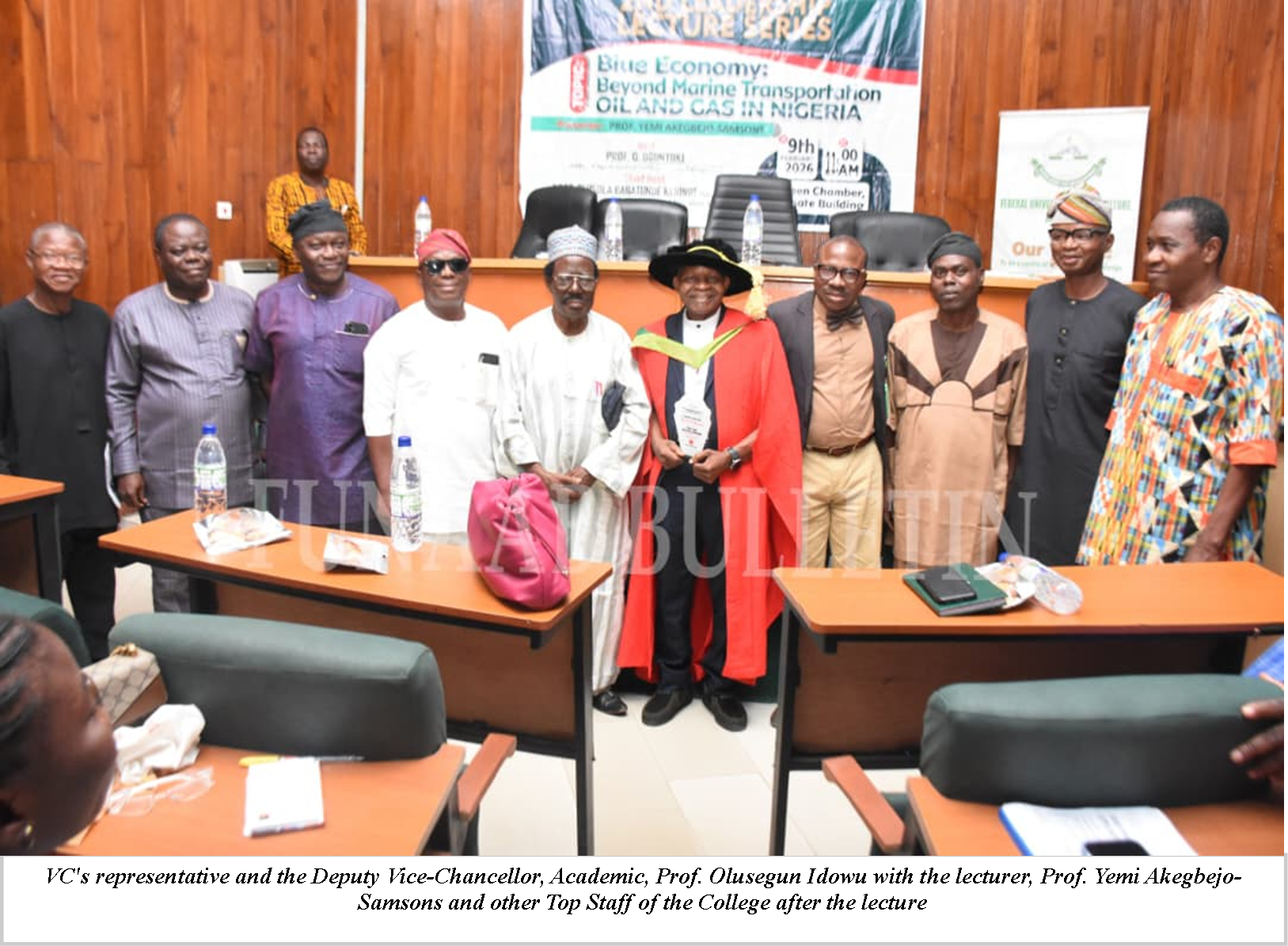
A Professor of Aquaculture and Coastal Fisheries Management in the College of Environmental Resources Management (COLERM), Federal University of Agriculture, Abeokuta (FUNAAB), Prof. Yemi Akegbejo-Samsons, has called for the strategic harnessing of Nigeria’s aquatic resources as a sustainable pathway to tackling food insecurity and strengthening the national economy.
Delivering a compelling lecture at the 2nd COLERM Leadership Lecture Series, titled “Nigeria’s Blue Economy: Beyond Marine Transportation, Oil and Gas,” Prof. Akegbejo-Samsons urged policymakers and stakeholders to rethink the Blue Economy as a primary driver of food security and economic resilience.
The renowned aquaculture expert argued that Nigeria’s vast aquatic resources, if properly managed, possess immense untapped potential to significantly reduce fish importation, generate employment, and promote inclusive and sustainable development.
Reframing the concept of the Blue Economy beyond its conventional association with maritime transportation and petroleum exploration, he described it as a holistic development framework that must balance economic growth, social equity, and environmental sustainability.
Critiquing the nation’s current approach, Prof. Akegbejo-Samsons observed that while the establishment of the Federal Ministry of Marine and Blue Economy in 2023 was a commendable step, it must be strengthened through clearer policy direction and stronger scientific grounding. He stressed the urgent need to ground decision-making in research, data, and long-term sustainability principles.
Positioning aquatic resources as both a national food basket and an economic engine, he called for a decisive shift from political rhetoric to science-driven action. According to him, achieving meaningful transformation requires stronger synergy between political will and scientific expertise, with universities playing a central role in this process.
“Universities must lead in manpower development, technology innovation, and evidence-based policy advisory,” he stated, highlighting FUNAAB’s interdisciplinary strengths in aquaculture, environmental management, agribusiness, and extension services as strategic assets in advancing the Blue Economy agenda.
He further identified the Centre of Excellence in Agricultural Development and Sustainable Environment (CEADESE) as a critical institutional platform capable of driving research, innovation, and policy engagement in the sector.
Earlier in his address, the Vice-Chancellor, Prof. Babatunde Kehinde, represented by the Deputy Vice-Chancellor (Academic), Prof. Olusegun Idowu, reaffirmed the University’s commitment to translating academic research into practical solutions for national development. He described the Leadership Lecture Series as a vital platform for aligning scholarship with national priorities, particularly in areas such as economic diversification, sustainability, and empowerment.
Commending COLERM for promoting intellectually relevant discourse, the Vice-Chancellor noted that FUNAAB’s agricultural mandate naturally extends to aquatic systems and resource management. He urged researchers to ensure their work transcends academic publication and influences public policy and societal impact.
Earlier in his Welcome Address, the Dean of COLERM, Prof. Olusegun Oguntoke, underscored the College’s commitment to leading conversations on resource governance, climate resilience, and sustainable development. He acknowledged the foundational contributions of pioneering scholars whose efforts have strengthened the College’s academic standing.
The lecture attracted distinguished academics and stakeholders, including former Vice-Chancellor of Landmark University, Prof. Adeniyi Olayanju and former Deputy Vice-Chancellor, Development, Kola Adebayo among others.