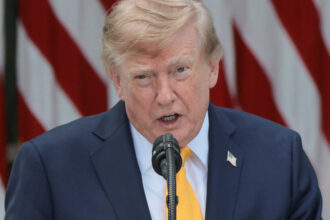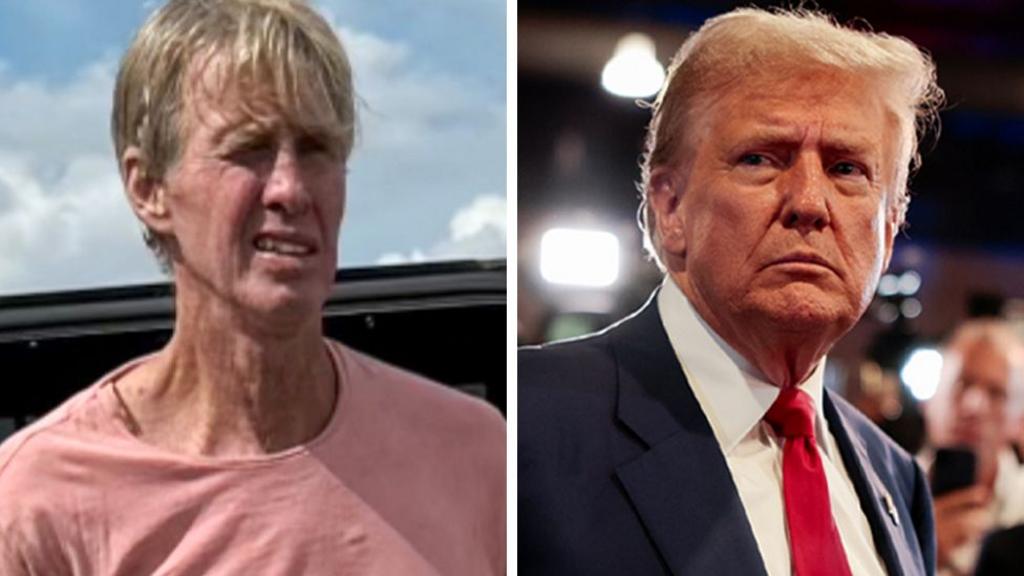
A man convicted of attempting to assassinate former United States President Donald Trump while he was playing golf in southern Florida has been sentenced to life imprisonment, bringing a dramatic conclusion to one of the most serious security cases in recent American political history.
Ryan Wesley Routh, 59, was found guilty of attempting to kill Trump at one of his golf courses in West Palm Beach in the fall of 2024. The attack, which federal authorities say was meticulously planned over several months, was thwarted by the swift action of a US Secret Service agent who spotted the suspect moments before he could carry out the shooting.
According to evidence presented at trial, Trump was on the golf course when a Secret Service agent noticed the barrel of a rifle protruding from dense bushes near the perimeter of the property. Sensing an imminent threat, the agent immediately fired at the suspect. Routh fled the scene but was apprehended shortly afterward by law enforcement officers in the surrounding area.
In a sentencing memorandum, US District Judge Aileen Cannon described Routh’s actions as exceptionally grave and said they “undeniably warrant a life sentence.”
“He took steps over the course of months to assassinate a major presidential candidate, demonstrated the will to kill anybody in the way, and has since expressed neither regret nor remorse to his victims,” Judge Cannon wrote. She added that the severity of the crime, coupled with Routh’s conduct before and after the incident, left no room for leniency.
Routh, a native of North Carolina who had been living in Hawaii before his arrest, pleaded not guilty to the charges. In a highly unusual move, he chose to represent himself during the trial, which began on September 8. His decision raised concerns among court officials, especially as proceedings revealed a pattern of erratic and disruptive behaviour.
Throughout the trial, Routh frequently made bizarre statements and interrupted proceedings. At one point, he challenged Trump to a game of golf. On other occasions, he made rambling references to Adolf Hitler, Russian President Vladimir Putin, and unrelated global conflicts. His conduct repeatedly forced Judge Cannon to intervene, and on several occasions she ordered the jury to leave the courtroom so order could be restored.
Despite his self-representation, the prosecution presented extensive evidence linking Routh directly to the assassination attempt. Federal agents testified that although Routh may not have had a clear line of sight to Trump at the exact moment he was spotted, he was heavily armed and positioned in a location that suggested an imminent attack.
Jurors were shown a semiautomatic rifle recovered from the bushes where Routh had been hiding. The weapon was fitted with a scope and an extended magazine, indicating, prosecutors said, an intention to carry out a mass-casualty shooting if necessary. Investigators also recovered personal items belonging to Routh at the scene.
In addition, prosecutors presented evidence that Routh had left behind a list of locations where Trump was likely to appear, suggesting careful surveillance and planning. A handwritten note addressed to a friend was also entered into evidence. In the note, Routh explicitly described the incident as “an assassination attempt,” leaving little doubt, prosecutors argued, about his intent.
The lead prosecutor in the case, John Shipley, told the court that the evidence against Routh was overwhelming. “A mountain of evidence was presented showing how close he came to actually pulling this off,” Shipley said, emphasising the danger posed not only to Trump but also to bystanders, security personnel, and members of the public.
After the jury returned a guilty verdict, the courtroom descended into chaos when Routh attempted to stab himself in the neck with a pen. US marshals intervened immediately and escorted him out of the courtroom before he could seriously injure himself. He was later treated and returned to custody.
Routh’s defence lawyer, Martin Ross, who was appointed to assist despite Routh’s decision to represent himself, said an appeal would be filed. Ross argued that his client’s mental state and the conduct of the trial would form the basis of the appeal, though he acknowledged the seriousness of the evidence presented.
The Florida incident marked the second attempt on Trump’s life in 2024, a year that saw unprecedented threats against the former president. In July of that year, a gunman opened fire at a Trump campaign rally in Butler, Pennsylvania. That attack killed one person and wounded several others, including Trump himself, who sustained minor injuries.
The Pennsylvania shooter was later identified as 20-year-old Thomas Crooks. He was shot and killed by law enforcement officers at the scene, preventing further bloodshed.
Taken together, the two incidents raised alarm across the United States and prompted renewed debate about political violence, security for public figures, and the growing climate of extremism. Security agencies subsequently reviewed and strengthened protective measures around Trump and other high-profile political figures.
In sentencing Routh to life in prison, the court sent a clear message about the consequences of political violence and threats against democratic institutions. Judge Cannon noted that the sentence was intended not only to punish the offender but also to protect the public and deter similar acts in the future.
As Routh begins his life sentence, the case stands as a stark reminder of the risks faced by political leaders and the critical role played by law enforcement in preventing acts of violence before they can unfold.