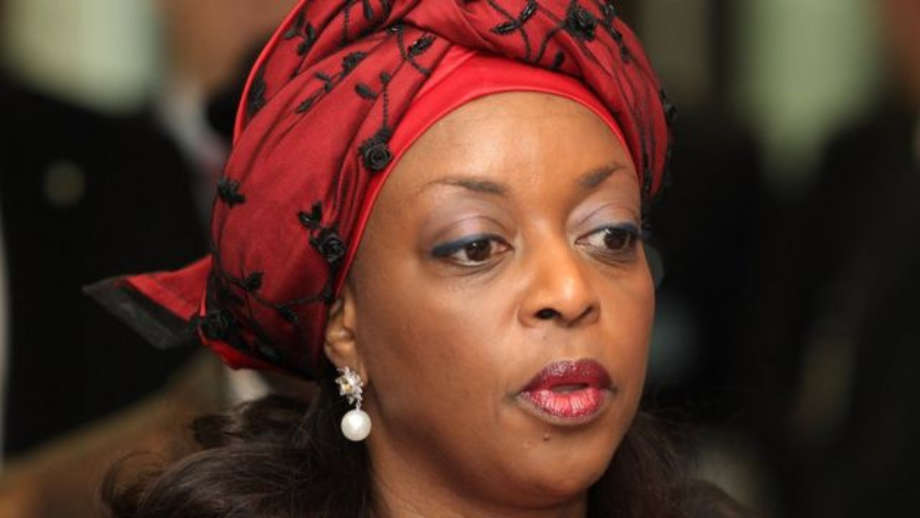
Proceedings resumed on Monday at a United Kingdom court as prosecutors laid out detailed evidence against former OPEC president and Nigeria’s former minister of petroleum resources, Diezani Alison-Madueke, who is standing trial alongside her brother, former bishop Doye Agama, and Duchess Oil executive Ayinde Olatimbo Bukola. The case, which has drawn intense public interest in Nigeria and beyond, centres on allegations of bribery and the receipt of illicit financial benefits linked to Nigeria’s oil sector.
During the hearing, the court listened to testimony from Monica, a director at the high-end Vincenzo Cafferrella furniture gallery in London, who described a series of luxury purchases allegedly made by Alison-Madueke. Her evidence was presented as part of the prosecution’s effort to demonstrate what it claims was an extravagant spending pattern inconsistent with legitimate income sources.
Prosecutor Ms Sarah Leary told the court that financial records showed substantial sums spent on designer furniture over a relatively short period. She highlighted one particular day on which approximately £170,000, equivalent to about ₦325 million, was allegedly spent on luxury chairs, lamps and tables. According to the prosecution, this was followed by further large purchases in the days and weeks that followed, suggesting a sustained period of high-value expenditure.
The items listed included bespoke chairs, tables, lamps and other furnishings from the exclusive gallery, known for catering to wealthy clients seeking custom-made luxury interiors. Ms Leary argued that the volume and value of the purchases formed part of a broader pattern of conduct that prosecutors say is central to the charges before the court.
Counsel for the defence did not dispute the existence or monetary value of the items referenced by the prosecution. However, defence lawyers maintained that the context, source and intent behind the spending would be addressed as the trial progresses. The defence has consistently denied that the purchases were linked to any criminal activity, stressing that all defendants deny wrongdoing.
The courtroom atmosphere extended beyond the legal arguments, with observers noting the attention drawn by the arrival of family members and associates of the defendants. Outside the courtroom, onlookers and members of the media gathered as relatives entered the building, their appearances reportedly timed in a way that created a notable public display. Observers described the scene as highly choreographed, adding to the sense of drama surrounding the high-profile proceedings.
Prosecutors allege that the luxury spending presented in court is indicative of a wider pattern of misconduct involving bribes and other improper benefits. These claims are strongly contested by the defence, which has emphasised the presumption of innocence and reminded the court that none of the allegations have been proven.
For many Nigerians closely following the case, the proceedings carry particular significance. Prosecutors have asserted that the funds at the heart of the allegations are linked to revenues derived from Nigeria’s oil sector, a vital national resource that has long been at the centre of corruption controversies. This connection has intensified public scrutiny, with many viewing the trial as a rare opportunity for accountability in relation to alleged abuses in the management of the country’s petroleum wealth.
The trial has also revived public discussion following earlier reports by UK prosecutors alleging that Alison-Madueke lavished more than ₦4 billion at luxury stores in London and enjoyed private jet flights while in office. These claims, which date back several years, have resurfaced as evidence continues to be presented before the court.
According to the prosecution, Alison-Madueke is accused of accepting “financial or other advantages” from individuals linked to the Atlantic Energy and SPOG Petrochemical groups. The court was told that both companies allegedly secured lucrative contracts with the Nigerian National Petroleum Corporation, now known as the Nigerian National Petroleum Company Limited, or its subsidiaries, during her tenure as petroleum minister.
Prosecutors further claim that the former minister received £100,000, approximately $137,000, in cash, along with access to chauffeur-driven vehicles, a private jet flight to Nigeria, and extensive refurbishment work at several London properties. Additional alleged benefits include the payment of staff costs at those properties, school fees for her son, luxury goods from high-end retailers such as Harrods and Louis Vuitton, and further private jet flights.
The prosecution argues that these benefits were provided as inducements or rewards in connection with the award of oil-related contracts, forming the basis of the bribery charges. The defence, however, has rejected these assertions, maintaining that the prosecution’s narrative does not accurately reflect the facts and that the evidence will be challenged as the trial unfolds.
Diezani Alison-Madueke, who served as Nigeria’s petroleum minister and held the influential position of OPEC president between 2014 and 2015, has been the subject of multiple legal actions in different jurisdictions, including the United States and the United Kingdom. She was arrested in London in October 2015 and has remained on bail in Britain since then. Formal charges relating to the current case were brought in 2023, nearly eight years after her arrest, allegations she has consistently denied.
Her co-defendants, Doye Agama and Ayinde Olatimbo Bukola, are also facing bribery charges linked to the same set of allegations. Prosecutors told the court that all three defendants had British addresses at the time the alleged offences were committed, a factor relevant to the UK court’s jurisdiction over the case.
As the trial continues, further witnesses are expected to give evidence in the coming days, with prosecutors aiming to build a comprehensive picture of the alleged financial flows and benefits. The defence is expected to cross-examine witnesses and present its own evidence in response, setting the stage for what is likely to be a closely watched legal battle.
Beyond the courtroom, the case has reignited broader debates in Nigeria about corruption, accountability and the management of public resources. Many Nigerians see the proceedings as symbolic of long-standing grievances over the oil sector, where vast revenues have often contrasted sharply with persistent poverty and underdevelopment.
While the outcome of the trial remains uncertain, its significance is already clear. For supporters of accountability, it represents a rare instance of a senior former official being subjected to sustained judicial scrutiny abroad. For the defendants, it is a test of their insistence on innocence and their right to a fair trial. As proceedings continue this week, public attention is likely to remain firmly fixed on the courtroom, where the fate of one of Nigeria’s most prominent former officials is being decided.