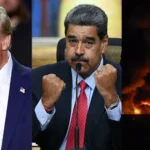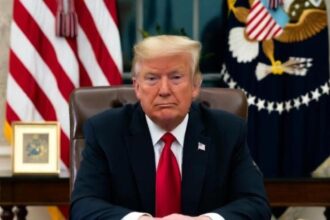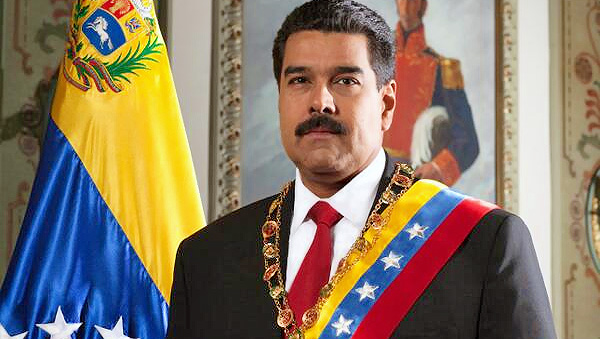
Washington and Caracas were thrust into unprecedented political and military upheaval on Saturday following the announcement by former United States President Donald Trump that Venezuelan President Nicolás Maduro and his wife had been captured by U.S. forces after a series of air strikes on strategic targets across Venezuela. The development, described by Trump as a decisive blow against what he termed “narco-terrorism,” marks the most direct American military intervention in Latin America in decades and has ignited intense global debate over sovereignty, international law, and regional stability.
Speaking during a press briefing in Washington, Trump declared that the United States would assume temporary administrative control of Venezuela to ensure what he described as a “safe, orderly, and democratic transition.” He accused Maduro’s government of operating a criminal state apparatus deeply involved in the large-scale trafficking of cocaine into the United States and other parts of the world.
“Today, the United States acted to protect its people and the world from a regime that has turned a sovereign nation into a hub of narcotic terrorism,” Trump said. “Until a safe transition can take place, America will oversee the stabilization of Venezuela in cooperation with law enforcement and international partners.”
Related posts:
- Trump Says Venezuela’s President Maduro Captured After U.S. Strikes
- “Christianity faces an existential threat in Nigeria” – President Trump vows to protect Christians globally
- Confront Trump or Cut Diplomatic Ties with the US – Sheikh Gumi Tells President Tinubu
- President Trump orders Pentagon to prepare for possible military action in Nigeria over Christian genocide
According to U.S. officials, Maduro and his wife were apprehended by elite American forces following coordinated air strikes that reportedly targeted military installations, air defense systems, and command centers in and around Caracas. While full operational details were not immediately disclosed, the U.S. administration maintained that the action was precise and aimed at minimizing civilian casualties.
Long Road to Confrontation
The dramatic escalation did not occur in isolation. Tensions between Washington and Caracas have simmered for more than two decades, intensifying after the rise of the late President Hugo Chávez and continuing under Maduro, who succeeded him in 2013. Successive U.S. administrations accused Venezuela of democratic backsliding, human rights abuses, and widespread corruption, while Caracas consistently framed American actions as imperial interference driven by oil interests.
Relations deteriorated sharply after Venezuela’s disputed presidential elections in recent years. The United States and several allies rejected the results, citing allegations of vote rigging, intimidation of opposition figures, and the manipulation of electoral institutions. Sanctions were imposed on senior Venezuelan officials, state-owned enterprises, and the country’s vital oil sector, further strangling an economy already battered by mismanagement and inflation.
The accusations of narcotics trafficking became a central pillar of Washington’s case against Maduro. U.S. law enforcement agencies alleged that senior figures in the Venezuelan government were complicit in facilitating cocaine shipments from Colombia and other parts of South America through Venezuelan territory and into North America. These allegations culminated in formal indictments, with the U.S. labeling Maduro and his inner circle as leaders of a “narco-state.”
Maduro repeatedly denied the charges, insisting that Venezuela was a victim rather than a perpetrator of drug trafficking and accusing the United States of fabricating claims to justify regime change. He argued that Washington’s true objective was to seize control of Venezuela’s vast oil reserves, the largest proven reserves in the world.
From Sanctions to Strikes
Despite years of diplomatic pressure and economic sanctions, Maduro remained firmly in power, backed by loyal security forces and support from allies including Russia, China, Iran, and Cuba. Efforts to install an alternative leadership, including recognition of opposition figures as interim presidents, failed to dislodge him.
In recent months, rhetoric from Washington hardened considerably. Trump and senior figures in his political circle repeatedly suggested that sanctions alone were insufficient to neutralize what they described as a transnational criminal threat emanating from Caracas. The alleged increase in cocaine flows into the United States was cited as evidence that Maduro’s government had become more emboldened.
The air strikes announced overnight represented a decisive break from decades of U.S. reluctance to engage in overt military action against a sitting Latin American government. The last comparable intervention occurred in 1989, when U.S. forces invaded Panama to remove military ruler Manuel Noriega, who was later convicted on drug trafficking charges in an American court.
Reactions Inside Venezuela and Beyond
In Venezuela, reports of explosions in Caracas and other regions sparked panic and confusion. State media acknowledged attacks on military facilities and announced emergency measures, including troop mobilization and restrictions on movement. Senior government officials called on citizens to resist what they described as foreign aggression, though there was no immediate official confirmation from Caracas of Maduro’s capture.
The international reaction was swift and polarized. Some governments critical of Maduro expressed cautious approval, emphasizing the need for a rapid return to civilian rule through credible elections. Others condemned the U.S. action as a violation of international law and Venezuelan sovereignty, warning that it could destabilize the entire region.
Analysts noted that Latin America has long harbored deep sensitivities over U.S. military interventions, shaped by a history of coups, proxy conflicts, and foreign interference. Even governments that opposed Maduro politically expressed unease about the precedent set by direct military action.
Uncertain Transition Ahead
Trump’s announcement that the United States would “run Venezuela” during a transition has raised profound questions about governance, legitimacy, and duration. U.S. officials said discussions were underway with international partners and Venezuelan opposition groups on the formation of an interim authority, the restoration of basic services, and the organization of new elections.
Humanitarian organizations have urged restraint, warning that further instability could worsen the suffering of millions of Venezuelans already affected by food shortages, collapsing healthcare, and mass displacement.
As events continue to unfold, the capture of Nicolás Maduro represents a watershed moment in hemispheric politics. Whether it ushers in a democratic transition or plunges Venezuela into deeper turmoil will depend on decisions made in the coming days by Washington, Venezuelan political actors, and the wider international community.