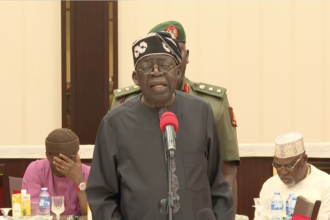
Barely 24 hours after President Bola Ahmed Tinubu addressed grieving Nigerians at the airport in Jos on April 2, 2026, assuring them that “this experience will not repeat itself,” the country was once again confronted with the grim reality of renewed violence. His words, intended to comfort a nation in mourning, were quickly overtaken by fresh bloodshed in Nyamgo Gyel, a community in Jos South Local Government Area, where several innocent citizens lost their lives in yet another brutal attack.
That tragic incident marked not an isolated relapse but the beginning of a disturbing pattern that unfolded across multiple states within days of the President’s promise. What followed was a sequence of violent episodes that further deepened public anxiety and called into question the effectiveness of government assurances on security.
Within a week of that presidential declaration, communities in Nasarawa State were thrown into chaos. In Akyawa and Udege Kasa, armed assailants unleashed terror, killing at least 11 people and forcing residents to flee their homes. Entire settlements were razed, leaving behind smouldering ruins and displaced families. Many individuals remain unaccounted for, with relatives still searching for missing loved ones amid the wreckage.
Simultaneously, in Zamfara State, one of the most alarming incidents in recent memory unfolded. No fewer than 150 Nigerians were abducted from the Kurfa Danya and Kurfan Magaji communities in a coordinated mass kidnapping. The scale and audacity of the operation underscored the growing boldness of criminal elements, who appear increasingly unrestrained despite repeated government pledges to curb insecurity.
On that same day, violence erupted in Borno State, specifically in Chibok—a town already etched into Nigeria’s painful history. Armed insurgents stormed the area, killing four security officers and setting homes ablaze. The attack served as a grim reminder that regions long plagued by insurgency remain dangerously vulnerable.
The violence did not abate. On Easter Sunday, a day that should symbolize peace and renewal, fresh tragedy struck in Benue State. More than 17 Nigerians were reportedly killed in coordinated attacks that left entire communities devastated. Homes were destroyed, livelihoods disrupted, and many individuals remain missing. The timing of the assault, coinciding with a major Christian celebration, added another layer of anguish to an already distressed population.
As if to underscore the nationwide scale of the crisis, further attacks were recorded in Kaduna State. In the Ariko community of Kachia Local Government Area, terrorists reportedly targeted places of worship, killing several citizens inside churches and abducting many others. The sanctity of religious spaces, once considered safe havens, has now been severely compromised.
These successive incidents, occurring in rapid succession across different regions, have intensified concerns about the state of national security. They have also reignited debate about leadership accountability and the capacity of the government to fulfill its most fundamental obligation: the protection of lives and property.
The President’s assurance—“this experience will not repeat itself”—was unequivocal. Yet, the speed with which new tragedies unfolded has made that promise appear disconnected from the reality on the ground. For many Nigerians, such statements now risk being perceived not as commitments backed by actionable strategies, but as rhetorical gestures that fail to translate into tangible security outcomes.
The persistence of these attacks raises critical questions. Who are these perpetrators, and why do they continue to operate with apparent impunity? The notion that they are invisible or untraceable does not withstand scrutiny. Rather, their continued operations suggest systemic gaps in intelligence gathering, law enforcement coordination, and rapid response capabilities.
Moreover, the psychological toll on citizens cannot be overstated. Nigerians are increasingly living in fear—fear of attacks in their homes, in their communities, and even in places of worship. The erosion of public confidence in security institutions is becoming more pronounced, as communities feel abandoned and exposed.
Another troubling dimension is the perception of distance between leadership and the affected communities. In many of these incidents, there is a growing sentiment that those in positions of authority are not directly engaging with the realities faced by ordinary citizens. This perceived disconnect further widens the trust deficit and fuels frustration among the populace.
At its core, this situation represents a profound governance challenge. Security is not merely one of many responsibilities of government; it is the primary duty upon which all other functions depend. Without safety, economic activity stalls, social cohesion weakens, and national development becomes elusive.
Nigeria is facing what can only be described as a national emergency. The frequency, scale, and geographic spread of these attacks indicate a crisis that requires urgent, coordinated, and decisive action. Incremental responses or routine condemnations are no longer sufficient. What is needed is a comprehensive security overhaul that addresses both immediate threats and underlying structural issues.
This includes strengthening intelligence networks, enhancing inter-agency collaboration, investing in modern security infrastructure, and ensuring that perpetrators are swiftly apprehended and prosecuted. Equally important is the need to rebuild trust between the government and the people through transparency, accountability, and visible action.
The events of the past week have painted a stark picture: Nigeria is bleeding, and the wounds are deepening. Each new attack not only claims lives but also chips away at the nation’s collective sense of security and hope.
In this context, the gap between promise and reality becomes more than a political issue—it becomes a matter of life and death. Leadership, therefore, must rise to the occasion, not merely in words but in decisive, sustained action that restores confidence and safeguards the lives of citizens.
The message is clear: Nigerians deserve more than assurances. They deserve protection, justice, and the fundamental right to live without fear.
A New Nigeria is Possible.