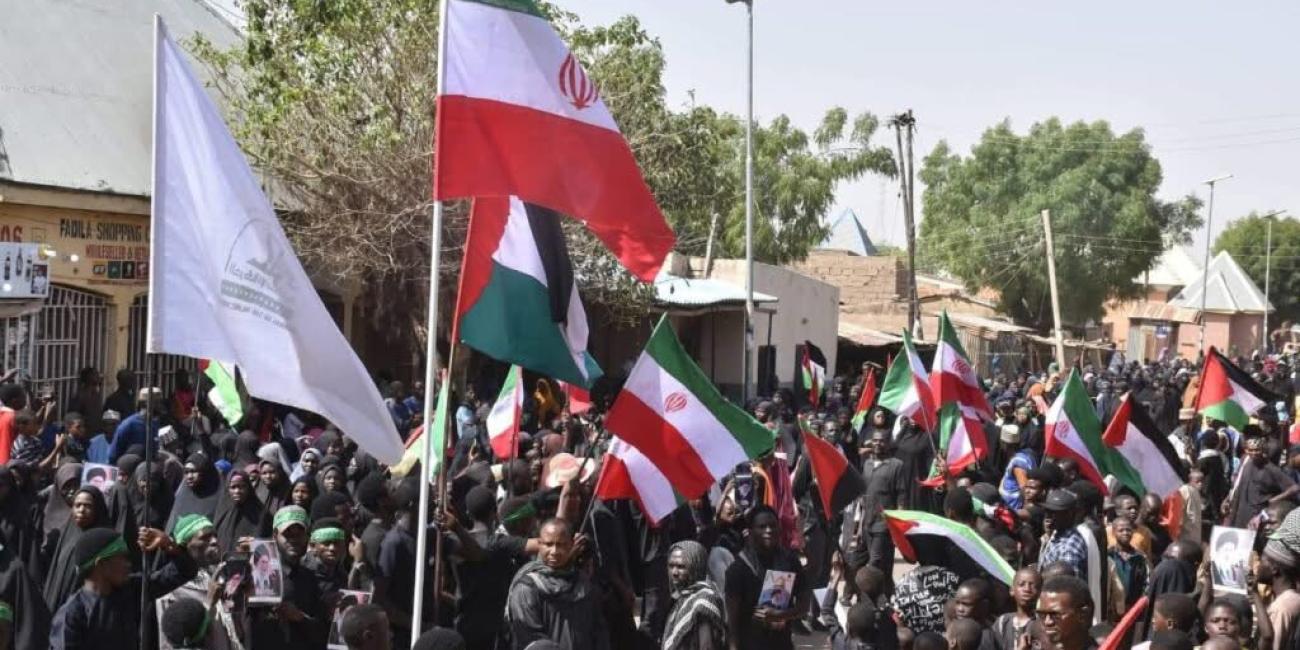
Members of the Islamic Movement in Nigeria (IMN), popularly known as Shi’ites, on Tuesday staged coordinated protests in Potiskum and Nguru Local Government Areas of Yobe State, condemning the killing of Iran’s Supreme Leader, Ayatollah Ali Khamenei.
The demonstrators marched through major streets in both towns, waving Iranian flags and carrying large portraits of Khamenei, whom they described as a revered spiritual authority and enduring symbol of resistance within the global Islamic community. The rallies drew dozens of participants who chanted solidarity slogans in support of Iran while denouncing what they characterised as foreign aggression.
Throughout the demonstrations, chants condemning alleged interference by the United States and Israel echoed across the streets. Protesters accused the two nations of orchestrating a joint military operation that led to Khamenei’s death, describing the development as an assault on Muslim leadership and sovereignty.
In Potiskum, leader of the local Shi’ite community, Abdullahi Hassan, addressed journalists during the procession, stating that the protest was organised to formally register the group’s rejection of the circumstances surrounding the Iranian leader’s death.
“We are here to protest the killing of Ayatollah Ali Khamenei. This is an attack on the dignity of Muslims globally, and no right-thinking person should accept it,” Hassan declared.
He maintained that Khamenei’s death represented more than the loss of a national figure, portraying it as a symbolic blow to what he termed the collective identity of Muslims worldwide. According to him, the IMN would continue to mobilise in opposition to actions it believes undermine national sovereignty and destabilise the Islamic world.
The protest in Nguru followed a similar pattern, with participants assembling in organised formations and moving peacefully through designated routes. Speakers at the rally expressed outrage over what they described as a violation of international norms and called for global condemnation of the incident.
“We mourn the loss of our leader and call on all peace-loving nations to condemn this act,” one of the organisers said while addressing the crowd.
Demonstrators emphasised that their action was intended as a peaceful expression of solidarity with Iran and as a platform to voice their disapproval of escalating military actions in the Middle East. Placards carried by participants bore inscriptions calling for justice, respect for sovereignty, and an end to foreign intervention in Muslim-majority countries.
The Yobe protests come amid heightened international tensions following confirmation by Iranian state media that Khamenei died during a large-scale U.S.-Israeli military operation targeting strategic installations in Iran. The strikes, reportedly launched around February 28, 2026, have since evolved into sustained military exchanges between Iran and its adversaries.
Reports indicate that the confrontation has involved retaliatory missile and drone attacks, resulting in casualties and damage across multiple locations. The escalation has raised concerns about broader regional instability, with observers warning that the conflict could further destabilise the Middle East.
In response to Khamenei’s death, Iranian authorities declared 40 days of national mourning. The late cleric had led the country for nearly four decades, exercising ultimate authority over its political, military and religious institutions. His tenure was marked by firm opposition to Western influence and strong support for allied movements across the region.
For IMN members in Yobe, Khamenei’s leadership held particular symbolic importance. The movement, which draws ideological inspiration from Iran’s Islamic Revolution, has historically expressed solidarity with Iranian leaders and positions on global geopolitical issues.
Despite the charged atmosphere surrounding the demonstrations, Tuesday’s protests in both Potiskum and Nguru remained peaceful. There were no reports of clashes with security agencies, injuries, or arrests as of the time this report was filed. Security personnel were said to have monitored the rallies from a distance to ensure public order.
The protests underscore how international geopolitical developments continue to resonate within local communities in Nigeria, particularly among groups with transnational religious and ideological affiliations. While the immediate demonstrations concluded without incident, the broader conflict in the Middle East remains fluid, with potential implications for global security and diplomatic relations.
As tensions persist abroad, IMN leaders indicated that further peaceful actions could be organised, depending on developments in the ongoing crisis. For now, the Yobe rallies stand as a local expression of grief and political solidarity amid a rapidly evolving international confrontation.