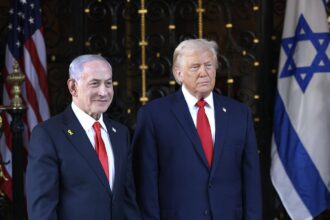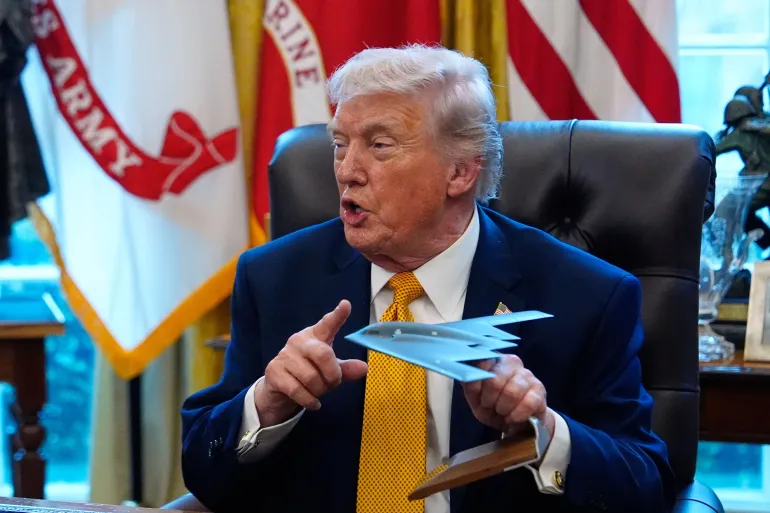
Donald Trump has publicly responded to the resignation of Joseph Kent, who stepped down as Director of the United States National Counterterrorism Center amid mounting controversy over U.S. military operations against Iran. The resignation has intensified debate within Washington over the direction of American foreign policy and the expanding conflict involving the United States, Israel, and Iran.
Speaking during an interview with Fox News, Trump offered a blunt assessment of Kent’s tenure and his stance on national security. The president indicated that he had long harbored doubts about Kent’s approach to security matters, describing him as insufficiently firm in confronting threats.
“I always thought he was weak on security. Very weak on security,” Trump stated in remarks aired Tuesday. “I didn’t know him well. But I thought he seemed like a pretty nice guy. But when I read his statement, I realised that it’s a good thing he’s out because he said Iran was not a threat.”
Trump’s comments followed Kent’s formal resignation earlier the same day. In a letter addressed directly to the president, Kent announced that he had chosen to step down after what he described as “much reflection,” with his resignation taking immediate effect.
“After much reflection, I have decided to resign from my position as Director of the National Counterterrorism Center, effective today,” Kent wrote.
In his letter, Kent made clear that his departure was driven by fundamental disagreements over the administration’s military engagement with Iran. He stated that he could not continue in his role while supporting a conflict he believed was unnecessary and strategically misguided.
“I cannot in good conscience support the ongoing war in Iran,” Kent declared. “Iran posed no imminent threat to our nation, and it is clear that we started this war due to pressure from Israel and its powerful American lobby.”
Kent’s remarks signaled a dramatic break from the administration’s official position, which has maintained that military action was justified on national security grounds. The resignation letter framed his objections as rooted in principles that he believed had once defined Trump’s foreign policy outlook.
“I support the values and the foreign policies that you campaigned on in 2016, 2020, 2024, which you enacted in your first term,” Kent wrote. “Until June of 2025, you understood that the wars in the Middle East were a trap that robbed America of the precious lives of our patriots and depleted the wealth and prosperity of our nation.”
Kent’s letter also criticized what he described as a coordinated campaign by certain international and domestic actors to shape U.S. policy toward confrontation. He accused “high-ranking Israeli officials and influential members of the American media” of promoting narratives that, in his view, distorted the threat assessment regarding Iran and pushed the administration toward military escalation.
According to Kent, this “echo chamber” misled policymakers into believing that Iran represented an immediate and unavoidable danger to the United States. He argued that promises of a swift and decisive victory were unrealistic and echoed flawed justifications that preceded earlier Middle Eastern conflicts.
“This echo chamber was used to deceive you into believing that Iran posed an imminent threat to the United States, and that should you strike now, there was a clear path to a swift victory. This was a lie,” Kent wrote, drawing parallels to the lead-up to the Iraq War.
Beyond policy disagreements, Kent’s resignation letter carried a deeply personal tone. A decorated military veteran, he referenced his extensive combat experience and the personal cost of war. He noted that he had deployed to combat eleven times and identified himself as a Gold Star husband, having lost his wife, Shannon, during a previous conflict.
“As a veteran who deployed to combat 11 times and as a Gold Star husband who lost my beloved wife Shannon in a war manufactured by Israel, I cannot support sending the next generation off to fight and die in a war that serves no benefit to the American people nor justifies the cost of American lives,” he wrote.
Kent concluded his letter with an appeal for reconsideration. He urged the president to reflect carefully on the long-term consequences of continued military engagement and to weigh whether the conflict aligned with American national interests.
“I pray that you will reflect upon what we are doing in Iran, and who we are doing it for,” Kent wrote. “The time for bold action is now. You can reverse course and chart a new path for our nation, or you can allow us to slip further toward decline and chaos. You hold the cards.”
Despite his criticisms, Kent ended his letter on a respectful note, expressing gratitude for the opportunity to serve. “It was an honor to serve in your administration and to serve our great nation,” he stated.
The resignation of the counterterrorism chief has fueled ongoing debates within political and security circles about the trajectory of U.S. involvement in the Middle East. Supporters of the administration argue that decisive military action is necessary to deter adversaries and protect American interests. Critics, however, warn of the risks of prolonged entanglement and question the intelligence assessments underpinning the campaign.
Trump’s response suggests that the administration remains firmly committed to its current strategy. By characterizing Kent as “weak on security,” the president signaled little appetite for revisiting the policy direction that prompted the resignation.
As the conflict continues and scrutiny intensifies, Kent’s departure stands as one of the most high-profile internal dissent cases within the national security establishment in recent months. Whether it marks a broader shift in debate or remains an isolated protest will likely depend on how events unfold in the coming weeks.