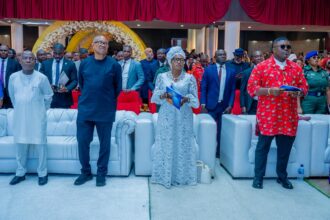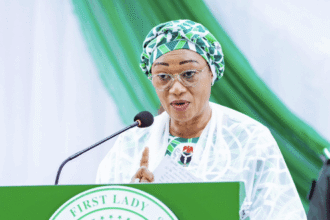
The Independent National Electoral Commission INEC on Friday held a high level meeting with the leadership of the Peoples Democratic Party PDP in Abuja, as efforts intensify to address the lingering internal crisis rocking Nigeria’s main opposition party ahead of forthcoming elections.
The meeting, described by the Commission as an interactive engagement, was convened against the backdrop of persistent disputes within the PDP that have generated multiple and, in some cases, conflicting communications to the electoral umpire. In a statement issued after the meeting, INEC said the engagement was aimed at strengthening compliance with the Constitution of the Federal Republic of Nigeria, the Electoral Act, and the Commission’s regulations and guidelines as preparations continue for a series of elections scheduled for 2026 and beyond.
Addressing party leaders at the session, INEC Chairman, Professor Joash Amupitan, explained that the Commission found it necessary to directly engage the PDP leadership following a barrage of correspondences from different factions and stakeholders within the party. According to him, these communications contained requests for INEC’s intervention on a range of issues arising from the party’s internal disagreements.
Professor Amupitan emphasised that while INEC does not interfere in the internal affairs of political parties, it is constitutionally and statutorily empowered to monitor their activities to ensure compliance with the law. He noted that this responsibility exists alongside the Commission’s core mandate of organising and conducting elections at all levels.
“INEC is guided at all times by the Constitution, the Electoral Act, and our regulations and guidelines,” the Chairman said. “These instruments define our powers and responsibilities, and they also shape how we respond to issues arising from political parties, including situations where there are disputes or conflicting claims.”
He explained that the Commission’s intervention, in this case, was not to take sides, but to provide clarity on legal and procedural requirements, especially as they relate to party administration, candidate nomination, and participation in elections.
Professor Amupitan informed the PDP leaders that INEC had already released its timetable and schedule of activities to political parties as part of preparations for upcoming elections. He stressed that the Commission remains firmly on course to deliver smooth, credible, and transparent polls, provided that all stakeholders play their roles in accordance with the law.
Drawing attention to imminent electoral activities, the INEC Chairman highlighted the Federal Capital Territory FCT Area Council elections scheduled for 21 February 2026. He noted that the polls, along with other elections slated for later in the year, require early planning and strict adherence to established procedures by political parties.
According to him, early engagement with stakeholders is critical to avoiding avoidable disputes and disruptions, particularly during sensitive processes such as party primaries, submission of candidates’ names, and campaign activities.
“The purpose of this meeting is to provide a platform for open and constructive engagement,” Professor Amupitan said. “We have received correspondences that reflect differing positions within the party. It is therefore important to engage directly, clarify issues, and work towards a common understanding that will enable the party to participate effectively and lawfully in forthcoming elections.”
He reassured the PDP leadership that INEC would remain neutral and impartial in all its dealings, insisting that the Commission would be guided strictly by the provisions of the law. The Chairman described the Constitution, the Electoral Act, and INEC’s regulations and guidelines as the three pillars underpinning the Commission’s operations, adding that strict adherence to these frameworks is essential to safeguarding the integrity of the electoral process.
Professor Amupitan also urged the PDP leaders to approach the engagement with openness and sincerity, stressing the need for frank and productive discussions. He noted that political parties are critical stakeholders in Nigeria’s democratic process, and their internal stability and compliance with the law have direct implications for the credibility of elections.
While details of the deliberations were not disclosed, the meeting is understood to have provided an opportunity for PDP leaders to present their perspectives on the crisis and to seek clarity on INEC’s position regarding contentious issues affecting the party.
The PDP has, in recent months, been embroiled in leadership and structural disputes that have spilled into the public domain, raising concerns among party members and observers about its preparedness for upcoming elections. The crisis has also resulted in competing claims and actions by different party organs, prompting appeals to INEC for recognition and intervention.
Political analysts view INEC’s engagement with the PDP leadership as a preventive step aimed at averting legal and administrative complications that could arise during election preparations. By clarifying the Commission’s expectations and legal boundaries, the meeting is expected to help reduce uncertainty and encourage compliance with due process.
In his closing remarks, Professor Amupitan thanked the PDP officials for honouring the Commission’s invitation despite the challenges facing the party. He reiterated INEC’s commitment to continuous stakeholder engagement as a cornerstone of credible and transparent elections.
“Dialogue remains one of the most effective tools for resolving issues and building trust,” he said. “INEC will continue to engage with all registered political parties, civil society organisations, and other stakeholders in the interest of strengthening Nigeria’s democracy.”
The Commission’s statement concluded by reaffirming its resolve to discharge its constitutional responsibilities without fear or favour, while encouraging political parties to resolve their internal disputes in line with their constitutions and the laws of the land.
As preparations intensify for the 2026 electoral calendar, the outcome of the engagement is expected to shape the PDP’s next steps and its relationship with the electoral umpire. For INEC, the meeting underscores its broader strategy of proactive engagement to ensure that electoral processes are not undermined by unresolved party crises.