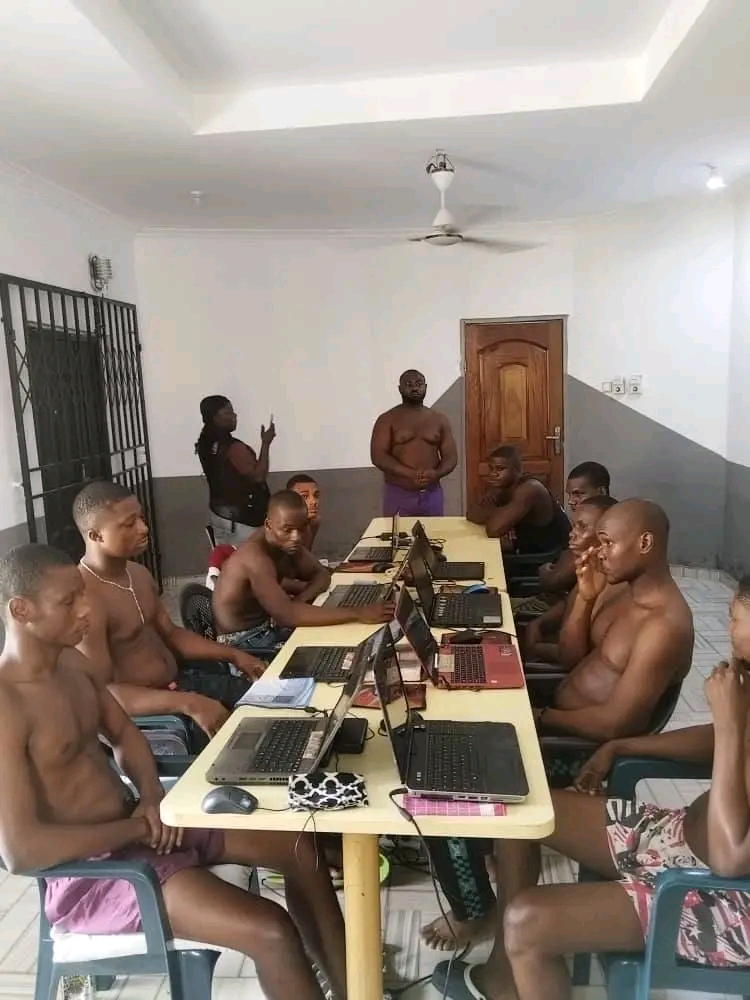
At least fifty three Nigerian nationals have been arrested in Ghana following a sweeping intelligence led operation targeting suspected cybercrime centres operating across several communities in the Greater Accra Region.
The arrests were confirmed in a statement issued on Sunday by Ghana’s Minister for Communications, Digital Technology and Innovation, Samuel Nartey George, who described the operation as a decisive step to safeguard Ghana’s cyberspace and protect the country’s international digital reputation.
According to the minister, the coordinated crackdown followed actionable intelligence gathered over a 48 hour period by the Cyber Security Authority of Ghana, which uncovered a network of locations allegedly being used as hubs for cyber related criminal activities.
Related posts:
- NDLEA Re-Arrests 80-Year-Old Ex-Convict, Intercepts Tramadol Hidden in Mannequins in Nationwide Drug Busts
- NDLEA Arrests Notorious Drug Kingpin ‘Kanmo-Kanmo’ 12 Years After Killing of Three Officers
- Governor Fubara Dumps PDP for APC in Major Political Realignment in Rivers State
- Osun Governor Ademola Adeleke Dumps PDP, Joins Accord Party in Major Political Shift
The intelligence pointed to multiple communities including East Legon Hills, Afienya, Kwabenya, Weija and Tuba as bases where organised cybercrime operations were being carried out.
Mr George disclosed that preliminary findings revealed a disturbing pattern in which young men, largely foreign nationals, were allegedly being exploited, coerced and in some cases forced by suspected kingpins to engage in various forms of cybercrime.
“These individuals were reportedly lured into Ghana under false pretences and subsequently compelled to participate in online criminal activities,” the minister said.
Acting on the intelligence provided by the Cyber Security Authority, a joint security task force was assembled to dismantle the suspected network. The team comprised operatives from National Security Operations, the Cyber Security Authority, the Criminal Investigations Department Headquarters and the Ghana Police Service SWAT Unit.
The joint team carried out simultaneous operations at the identified locations on January 16 and 17, 2026, in what authorities described as a carefully planned and executed operation to avoid leaks and ensure the safety of operatives and suspects.
During the raids, nine Nigerian nationals were arrested as principal suspects believed to be directly involved in coordinating and executing the alleged cybercrime activities across the affected communities.
In addition to the principal suspects, forty four other Nigerian nationals were rescued from various apartments where they were allegedly being held and used for cybercrime operations.
Authorities believe these forty four individuals are victims of human trafficking and cybercrime exploitation rather than masterminds of the illegal activities.
The minister said the rescued individuals were found operating laptop computers in different apartments, a discovery that pointed to a well structured and organised cybercrime network with multiple cells operating simultaneously.
Searches conducted in the apartments led to the recovery of a large cache of items suspected to have been used in the commission of cyber related offences.
Items recovered during the operations include fifty two assorted mobile phones, sixty two laptop computers and two pump action guns, raising concerns about the possible intersection between cybercrime and violent criminal activity.
A breakdown of the arrests across the various communities showed that five Nigerian nationals were arrested in East Legon Hills, eleven in Afienya, ten in Kwabenya, ten in Weija and seventeen in Tuba, bringing the total number of arrested individuals to fifty three.
Mr George stated that all arrested persons have been duly profiled and handed over to the Ghana Immigration Service for safekeeping and further investigations, pending the conclusion of security and legal processes.
He explained that the profiling process is crucial to determine the level of involvement of each individual, distinguish between suspected perpetrators and victims, and decide the appropriate legal or administrative action.
The minister also issued a strong warning to foreign nationals, particularly young people, who are invited to Ghana by fellow nationals with promises of lucrative jobs or quick financial opportunities.
He urged them to exercise caution and verify such claims thoroughly, noting that many victims of cybercrime exploitation are deceived into travelling abroad only to find themselves trapped in criminal networks.
“We caution foreign nationals invited to Ghana to verify claims made by their fellow nationals who lure them here under false pretences, especially promises linked to jobs or fast money,” he said.
Mr George further disclosed that this was not the first time Ghanaian authorities had carried out such operations, adding that previous crackdowns had yielded similar outcomes.
According to him, some individuals arrested in earlier operations have already been profiled by the Ghana Immigration Service in collaboration with the International Criminal Police Organisation, INTERPOL, and successfully handed over to Nigerian law enforcement agencies at the Seme border.
Others, he said, are currently facing criminal prosecution before Ghanaian courts, depending on the nature and severity of their alleged offences.
The minister emphasised that Ghana remains committed to cooperating with international partners and neighbouring countries to combat transnational cybercrime and human trafficking.
He reiterated that protecting Ghana’s cyber image and digital integrity is a national priority that the government is unwilling to compromise.
“Protecting Ghana’s cyber image internationally is non negotiable. Kudos to the CSA team and our partner law enforcement agencies for their professionalism and dedication,” the statement read.
Cybercrime has become a growing concern in West Africa, with criminal networks exploiting digital platforms for fraud, identity theft and other online scams that often target victims across borders.
Ghanaian authorities say the country’s growing digital economy and expanding internet penetration make it imperative to take proactive steps to prevent the nation from becoming a safe haven for cybercriminals.
Officials also noted that cybercrime networks increasingly rely on human trafficking tactics, recruiting or coercing young people to carry out online fraud under the control of organised syndicates.
Security analysts believe the latest operation sends a strong signal that Ghana is tightening the noose around cybercrime rings and strengthening inter agency collaboration to address emerging digital threats.
As investigations continue, authorities are expected to determine the full scope of the network, identify any additional suspects and establish possible links to international cybercrime syndicates.
For now, Ghanaian officials insist that sustained intelligence driven operations, combined with regional and international cooperation, remain key to dismantling cybercrime infrastructure and protecting the country’s reputation in the global digital space.