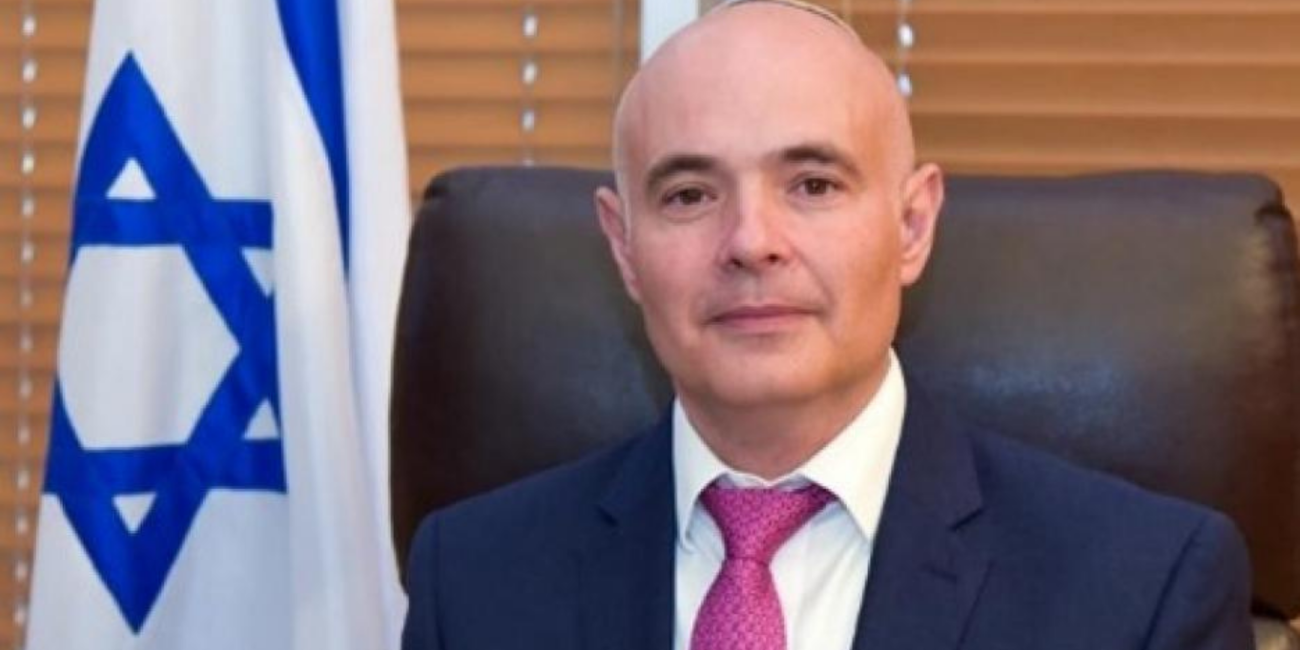
Israel has indicated its readiness to support Nigeria’s efforts to tackle insecurity through intelligence sharing and strategic cooperation, amid growing international concern over attacks on Christian communities and other vulnerable groups across the country. Israel’s Ambassador to Nigeria, Michael Freeman, said the proposed support would be carried out strictly in partnership with the Nigerian government and with full respect for Nigeria’s sovereignty.
Freeman disclosed this during an interview on Arise TV News, where he elaborated on recent remarks by Israeli Prime Minister Benjamin Netanyahu regarding Israel’s willingness to assist countries facing threats to Christian populations and broader security challenges. According to the ambassador, Israel’s approach to Nigeria is anchored on cooperation, consultation, and deference to Abuja’s priorities.
“Our aim is to work with the Nigerian government, and the Prime Minister highlighted issues of intelligence sharing and other areas,” Freeman said. “We will be led and guided by the Nigerian government as to where we can work and where we can partner.”
Related posts:
- (Video) 24 Abducted Kebbi Schoolgirls Regain Freedom Amid Rising Security Concerns in Northern Nigeria
- No Christian Genocide in Northern Nigeria, Says African Union Chief
- President Trump orders Pentagon to prepare for possible military action in Nigeria over Christian genocide
- Akwa Ibom Lawmakers Reject Motion to Ban Dog Meat Consumption Amid Public Health Concerns and Cultural Debate
He stressed that Israel would not act independently or unilaterally in Nigeria, noting that any form of involvement would be subject to Nigerian approval and coordination with relevant authorities. Freeman said Israel recognises Nigeria’s sovereignty and would only operate within clearly defined and mutually agreed frameworks.
Although international advocacy groups have framed the violence against Christian communities in parts of Nigeria as a “genocide,” Freeman said Israel’s proposed engagement goes beyond the protection of Christians alone. He explained that the broader objective is to assist Nigeria in addressing its overall insecurity, including terrorism, insurgency, and violent extremism.
“This is very much about working with an ally, working with a partner, and doing things to tackle insecurity as a whole within the country,” the ambassador said. “It is not about isolating one group or one community, but about supporting Nigeria in dealing with the challenges it is facing.”
Nigeria has for years battled multiple security threats across different regions. In the North East, Boko Haram and the Islamic State West Africa Province have waged a violent insurgency, while banditry, kidnapping, and communal violence have spread across the North West, North Central, and other parts of the country. Christian communities in the Middle Belt and parts of the North have been particularly affected, with reports of church attacks, killings, abductions of clergy, and mass displacement.
The issue has drawn sustained attention from the United States and international Christian advocacy groups. Several US based organisations and lawmakers have described the violence as religious cleansing or genocide, a characterisation the Nigerian government has consistently rejected. Abuja maintains that the crisis is driven by terrorism, criminality, and competition over land and resources, rather than state sanctioned religious persecution.
When asked how Israel would respond if the United States, Israel’s closest ally, were to take unilateral action in Nigeria under President Donald Trump, Freeman declined to speculate. He described the scenario as hypothetical and said it would be inappropriate for him to comment on decisions that would fall under US jurisdiction.
“Well, one, it’s a hypothetical situation, and two, I think there’s probably a better question to ask the American ambassador rather than the Israeli ambassador,” Freeman said. “In a hypothetical, we’d have to see what the situation was. I couldn’t tell you what our response would be.”
He reiterated that Israel’s consistent and preferred approach is to engage directly with the Nigerian government, rather than through external or unilateral actions by third parties.
“What I can tell you is that we want to work with the Nigerian government to see what we can do to help and work with them to tackle insecurity across the country,” he added.
On whether there have been direct diplomatic engagements with the administration of President Bola Tinubu following Netanyahu’s comments, Freeman said any such discussions would remain confidential. He explained that security related communications, particularly those involving intelligence and sensitive information, are not conducted in the public domain.
“Any communication behind the scenes will obviously remain behind the scenes,” he said. “Prime Minister Netanyahu has made our position clear, and anything that we can do in those areas, especially when you’re dealing with intelligence and information, is not something we’re going to talk about publicly because that would undermine the entire purpose.”
Freeman also addressed criticism that Netanyahu’s comments about protecting Christians globally appear contradictory in light of Israel’s ongoing military operations in Gaza. He rejected the claim, arguing that the Prime Minister’s remarks were global in scope and not limited to Nigeria.
“I don’t think they are contradictory at all,” Freeman said. “What Prime Minister Netanyahu spoke about was Christians across the world. It wasn’t only Christians in Nigeria.”
The ambassador said Netanyahu was drawing attention to Israel’s record on religious freedom and coexistence, particularly in the Middle East. He noted that Israel is the only country in the region where the Christian population is growing rather than declining.
“It is the only country in the Middle East where Christians have complete freedom of worship and freedom to do what they want,” Freeman said.
He described Israel as an example of religious coexistence, arguing that Christians enjoy full civil rights and opportunities within Israeli society. According to him, Christians in Israel are among the most educated and economically successful groups.
“If you look at Israeli society, Christians are the most well educated. They are the wealthiest. But fundamentally, Christians have total freedom of religion,” he said.
Freeman cited recent Christmas celebrations in Jerusalem as evidence of this freedom. He said thousands of Christians openly marked the holiday, including public religious processions and festivities.
“During Christmas, we saw thousands of Christians in Jerusalem walking through the Via Dolorosa to the Church of the Holy Sepulchre,” he said. “There were Christmas trees, Christmas lights, and Christians freely expressing their faith.”
He added that he personally witnessed the celebrations. “I was in Jerusalem on Christmas Eve and Christmas Day, and it was amazing to see Christians having a wonderful time, totally free to express their religion and identity,” he said.
The comments come amid renewed international scrutiny of Nigeria’s security situation. In recent years, the United States designated Nigeria a Country of Particular Concern for religious freedom violations, a move that strained diplomatic relations between Washington and Abuja. Although the designation was later lifted, US lawmakers have continued to press for tougher measures, including sanctions, arms restrictions, and closer monitoring of Nigeria’s security operations.
More recently, calls within US political and evangelical circles for stronger action to protect Nigerian Christians have intensified. Proposals have ranged from enhanced intelligence cooperation and targeted sanctions to more extreme suggestions of direct security intervention.
The Nigerian government has repeatedly stated that it welcomes international support but opposes any unilateral foreign action. Officials argue that such moves could undermine Nigeria’s sovereignty and complicate ongoing counterterrorism efforts.
It is against this backdrop of US pressure, international advocacy, and Nigeria’s worsening security challenges that Israel’s offer of intelligence cooperation has attracted heightened attention. While details of any potential collaboration remain undisclosed, Israeli officials insist that their approach will remain guided by partnership, discretion, and respect for Nigeria’s authority.
As debates continue over how best to address Nigeria’s complex security crisis, Israel’s statements signal a willingness to engage, but also underline the sensitive balance between international assistance and national sovereignty in one of Africa’s most strategically important countries.