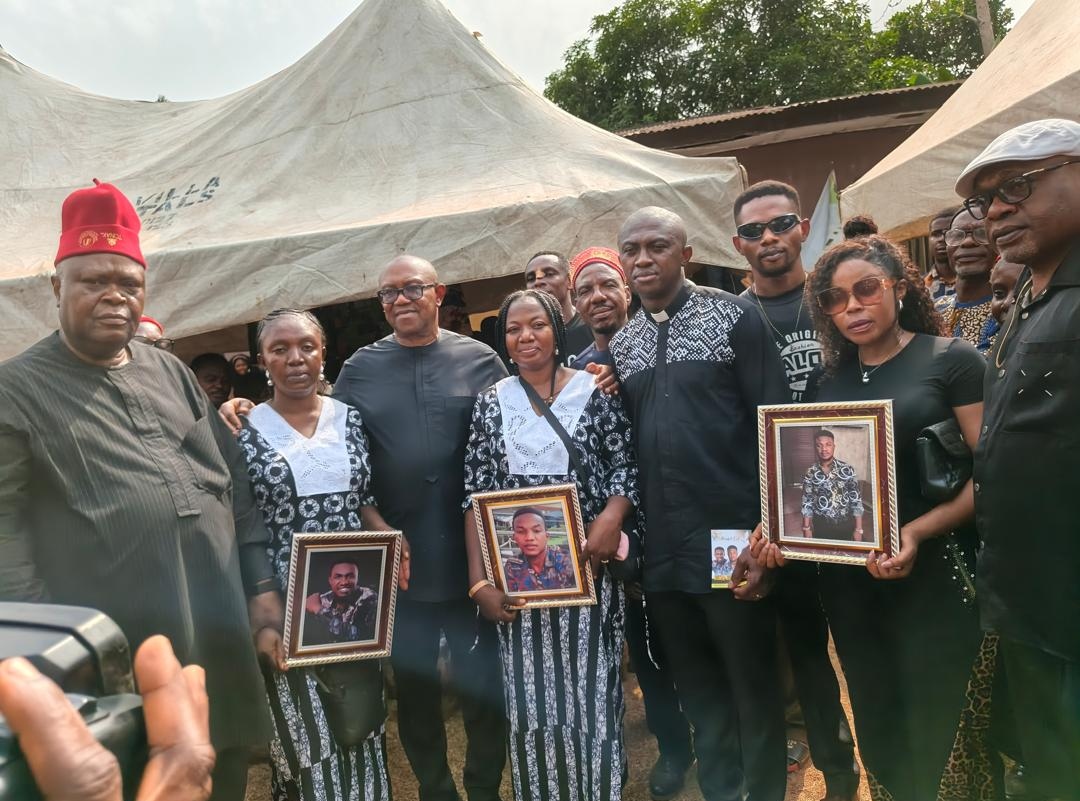
In a ceremony marked by profound grief and communal mourning, the three young brothers, Stephen Onyeka Omatu, Casmir Nnabuike Omatu, and Collins Kenechukwu Omatu, who tragically lost their lives in the Great Nigeria Insurance building fire on Lagos Island, were laid to rest yesterday in their hometown of Ihiala, Anambra State. The funeral drew family, friends, community members, and dignitaries, including the African Democratic Congress (ADC) presidential aspirant, Peter Obi, underscoring the national significance of the tragedy that has captured the attention and hearts of Nigerians.
The fire, which erupted in the Lagos Island office complex, left an indelible scar on the nation’s consciousness. Eyewitnesses recounted harrowing scenes of smoke and fire engulfing the multi-storey building, trapping office workers and visitors inside. Among them were the Omatu brothers, whose pleas for help echoed in desperate phone calls that went largely unanswered. Days passed before their lifeless bodies were recovered from the debris, a delay that magnified the tragedy and exposed glaring weaknesses in the nation’s emergency response system.
At the funeral, Peter Obi described the loss as “immeasurable,” reflecting both personal sorrow and national concern. “It is almost impossible to describe the depth of this tragedy,” he said. “For days, these young men sent distressing pleas for help while trapped in the building, yet there were no emergency services to rescue them. Several days passed in the rubble before their bodies were finally recovered. Several days of unanswered calls, of a system that failed them at the moment they needed it most.”
The burial ceremony, solemn yet profoundly moving, brought together mourners from across the region. Family members were seen weeping openly as they bid farewell to Stephen, the eldest, and Casmir and Collins, his younger siblings. Clergy officiating the service offered prayers for the souls of the departed, asking for divine strength and comfort for the grieving family. Community members shared memories of the brothers, painting a picture of young men full of promise, whose lives were marked by academic dedication, kindness, and a commitment to their local community.
The Great Nigeria Insurance building inferno has become a national point of reflection on public safety and the state of emergency services in Nigeria. Experts have long highlighted deficiencies in fire response infrastructure, lack of coordination among agencies, and insufficient training for emergency personnel. Lagos, as one of Africa’s most populous cities, faces unique challenges, including congested urban centers, high-rise buildings, and a dense concentration of commercial facilities, where a minor incident can quickly escalate into a disaster without timely intervention.
Peter Obi used the platform of the funeral to call for urgent reforms and accountability. “This is not just a personal loss for their family; it is a national loss,” he emphasized. “This tragedy should serve as a reminder that our emergency services must be improved and accessible to every citizen. We cannot continue like this. Every life matters, and no Nigerian should ever have to endure such neglect or be left to perish in such a gruesome way, while help could have been provided.”
Investigations into the fire have raised serious questions about building safety standards and enforcement. Preliminary reports indicate that outdated electrical systems, poor maintenance, and inadequate fire suppression measures contributed to the scale of the disaster. Safety advocates are now calling for comprehensive audits of commercial buildings across Lagos and other major cities to ensure compliance with fire safety regulations, including functional alarms, sprinklers, and clearly marked emergency exits.
The human toll of the incident, however, extends far beyond statistics. The Omatu family’s anguish reflects the collective pain of a society grappling with preventable tragedies. Social media platforms have been flooded with tributes, expressions of solidarity, and calls for reform, highlighting the widespread resonance of the brothers’ deaths. Many Nigerians have turned the grief into advocacy, emphasizing the need for immediate government action to prevent similar incidents in the future.
During the funeral service, Peter Obi offered personal prayers for the family, asking for divine comfort and resilience. “I pray that the souls of Steve, Casmir, and Collins find eternal rest,” he said. “And that God grants their family the courage, strength, and comfort to bear this unimaginable grief. May we never forget them, and may we be moved to ensure such a tragedy never happens again.”
The ceremony concluded with the burial of the three brothers side by side, a poignant reflection of the bond that death cannot sever. As mourners departed, the weight of the tragedy lingered, leaving a lasting impression on those in attendance and serving as a stark reminder of the vulnerabilities faced by citizens in moments of crisis.
Beyond the immediate loss, the incident has sparked urgent debates on governance, accountability, and public safety. Experts argue that while tragedies may be inevitable, preventable deaths like those of the Omatu brothers should compel action—ranging from improved infrastructure and rapid response mechanisms to community awareness campaigns on fire safety and emergency preparedness.
In the wake of the fire, advocacy groups, civil society organizations, and community leaders have intensified their calls for systemic reforms. Suggestions include regular inspection of high-rise commercial buildings, mandatory fire safety certifications, strategic placement of firefighting stations in densely populated urban centers, and enhanced training for emergency personnel. The Omatu tragedy is now serving as a catalyst for these conversations, emphasizing that public safety is not merely a policy issue but a moral imperative.
As the nation continues to process the loss, the funeral of Stephen, Casmir, and Collins Omatu stands as both a moment of mourning and a clarion call. Their deaths highlight the human cost of systemic inefficiencies, reminding all Nigerians and government authorities that every life has value. Communities, policy makers, and emergency agencies alike are being challenged to ensure that such preventable tragedies do not recur.
Peter Obi’s presence at the funeral underscores the intersection of personal empathy and public responsibility. By attending, he not only honored the memory of the young brothers but also amplified the urgent message that reform in emergency services and public safety cannot be delayed. His remarks resonate as a challenge to policymakers and the broader society: that the lives of citizens, especially the most vulnerable, must be protected at all costs.
The burial of the three brothers is a somber moment, but it is also a reminder of resilience and collective responsibility. While no words can undo the pain of the Omatu family, the hope is that their story will inspire immediate reforms, strengthen emergency response systems, and elevate public awareness on fire safety. As Nigerians reflect on the tragic loss, the enduring message is clear: the protection of human life must remain the highest priority, and the memory of Stephen, Casmir, and Collins should guide meaningful action to prevent similar tragedies in the future.