The Igbo Leaders of Thought (ILT) has once again expressed concern over the continued imprisonment of Nnamdi Kanu, leader of the Indigenous Peoples of Biafra (IPOB), describing the situation as deeply troubling amid ongoing appeals for his release.
Kanu was convicted in November 2025 by a Federal High Court in Abuja presided over by Justice James Omotosho on terrorism-related charges brought against him by the Nigerian government. Following the judgment, he was sentenced to life imprisonment. Although he has since appealed the ruling, he was transferred from the custody of the Department of State Services (DSS) in Abuja to a maximum-security correctional facility in Sokoto State.
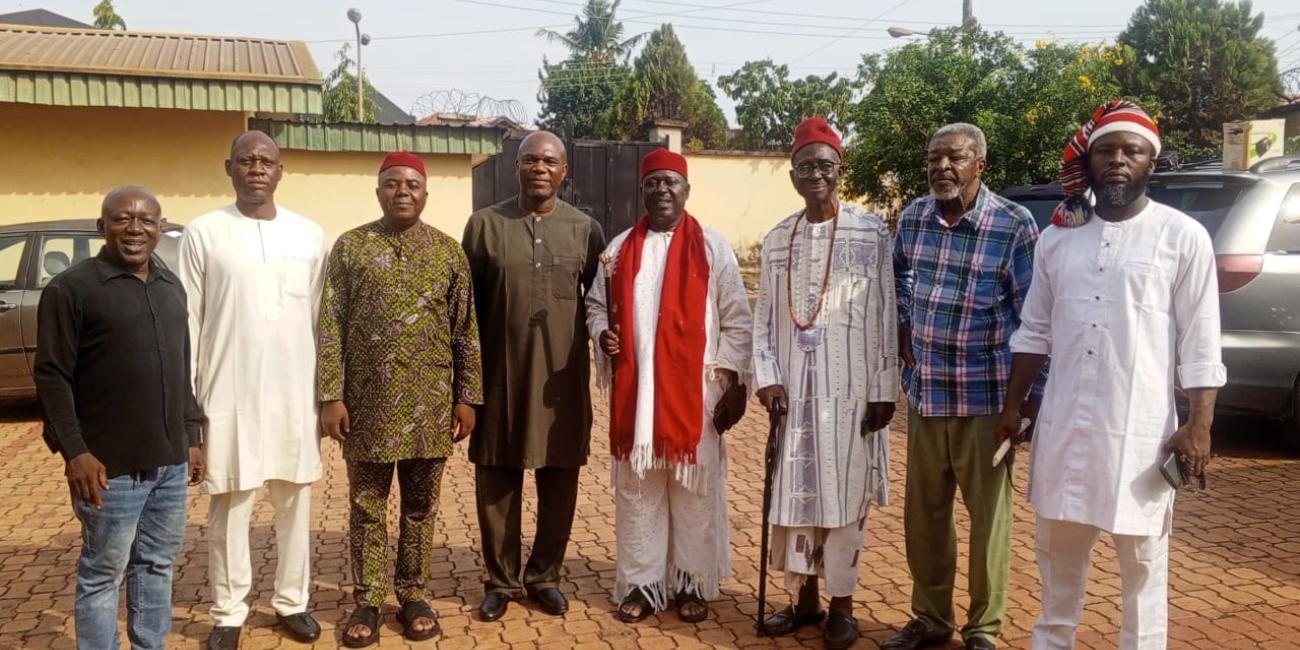
Speaking on Tuesday while receiving a delegation from Nzuko Ozo Ndigbo Nigeria, the President of ILT, Elochukwu Amucheazi, lamented Kanu’s continued incarceration despite what he described as widespread local and international appeals for his release.
Amucheazi, a Professor of Political Science and former Director-General of the National Orientation Agency, said the imprisonment of the IPOB leader remains a painful issue for many in the Southeast. He also used the occasion to raise broader concerns about what he characterised as the longstanding marginalisation of the Igbo people in Nigeria.
According to him, the grievances date back to the colonial era and have persisted through successive administrations. He argued that historical events, including the Nigerian Civil War, continue to shape the experiences and perceptions of the Igbo people within the federation.
Reflecting on the war, Amucheazi said the former Republic of Biafra received little or no international support during the 30-month conflict, noting that major global powers and even African countries did not intervene in favour of the secessionist region.
He also criticised post-war policies, particularly the “Reconciliation, Rehabilitation and Reconstruction” programme introduced under the administration of former Head of State Yakubu Gowon. According to him, the initiative did not adequately address the losses suffered by the Igbo people, especially in relation to economic recovery and reintegration.
The ILT president further drew historical comparisons with other societies, noting that despite significant losses during conflicts, some groups have managed to rebuild and thrive. He expressed the view that the Igbo people have also demonstrated resilience in the face of adversity, although challenges remain.
Amucheazi also referenced the role of prominent Nigerian leaders during and after the civil war, including Obafemi Awolowo, whose policies during the conflict have remained a subject of debate. He alleged that certain wartime strategies, including economic blockades, had devastating humanitarian consequences for the Igbo population.
In addition to historical grievances, the ILT leader raised concerns about more recent developments, including alleged destruction of Igbo-owned properties in parts of Lagos State. He cited political tensions following the 2023 general elections as a contributing factor, although such claims remain contested in public discourse.
He also commented on ongoing infrastructure debates, particularly the Lagos-Calabar coastal road project, suggesting that there were concerns about equitable regional inclusion in national development initiatives.
Despite the criticisms, Amucheazi expressed optimism about the future, stating that the current generation of Igbo leaders and intellectuals has the capacity to advocate for a more just and equitable Nigeria. He referenced the legacies of notable figures such as Ben Nwabueze and Pius Okigbo, who were known for their contributions to national development and policy discourse.
On contemporary political dynamics, Amucheazi also addressed the involvement of some Igbo business figures in political movements aligned with the current administration of Bola Tinubu. He suggested that such alignments may be influenced by economic considerations and pressures, though he maintained that political preferences among individuals may differ privately.
Earlier during the engagement, the National President of Nzuko Ozo Ndigbo Nigeria, Ike Oluka, delivered a presentation emphasising the need to revive traditional Igbo institutions as a pathway to restoring social order and cultural identity in the Southeast.
Oluka argued that the Ozo institution, which historically served as a foundation for governance in Igbo society, embodies principles of truth, justice, and communal responsibility. He stressed that holders of the Ozo title are custodians of cultural values and moral authority, rather than mere social figures.
According to him, the institution predates colonial rule and provided a system of governance rooted in consensus, accountability, and respect for human life. He maintained that a return to these foundational principles could help address contemporary socio-economic and political challenges in the region.
He highlighted key attributes associated with the institution, including integrity, courage, resourcefulness, and a commitment to the welfare of the community.
The meeting was attended by other prominent members of ILT, including its Secretary, Jerry Chidozie Chukwuokolo, and Joe Nwaorgu.
The discussions reflect ongoing conversations within the Southeast on issues of justice, identity, and national integration, as well as the role of traditional institutions in shaping the region’s future.