Inflation in the United States recorded a sharp and unexpected increase in March, reaching its highest level in nearly two years, as escalating geopolitical tensions in the Middle East disrupted global energy markets and intensified cost pressures across the economy. The surge has raised fresh concerns among policymakers, economists, and households already grappling with rising living expenses.
New data released by the United States Department of Labor showed that consumer prices rose by 3.3 percent over the 12 months leading up to March. This marks a significant jump from the 2.4 percent recorded in February and represents the steepest monthly inflation increase since 2022, when global markets were shaken by the fallout from the Russian invasion of Ukraine.
Analysts widely attribute the latest inflationary spike to energy-related factors, particularly the disruption of oil supply chains linked to the ongoing conflict involving the United States, Israel, and Iran. At the center of the crisis is the Strait of Hormuz, a strategic maritime corridor through which a substantial portion of the world’s oil supply is transported.
The temporary closure and restricted access to the strait triggered a sharp surge in global fuel prices, with immediate effects on transportation and production costs. Data indicates that gasoline prices rose by an extraordinary 21.2 percent between February and March, marking the largest monthly increase since records began in 1967. Similarly, fuel oil prices jumped by more than 30 percent, the most significant rise since February 2000.
These increases have had a pronounced impact on American consumers, particularly in states with already high living costs. In California, for example, residents faced even steeper fuel prices, with data from the American Automobile Association showing that the average price of gasoline reached $5.93 per gallon—well above the national average of $4.16.
For many households, the surge has translated into immediate financial strain. Drivers and commuters have been forced to adjust their routines, cut back on discretionary travel, and absorb significantly higher transportation costs. A young driver, Annel Villegas, described the situation as “terrible,” explaining that filling her truck now costs between $70 and $80—an expense that continues to stretch her budget.
“I have to do what I have to do to live,” she said, reflecting the sentiment of many Americans navigating the rising cost environment.
Economists estimate that the spike in fuel prices accounted for nearly three-quarters of the overall increase in inflation during the month. However, the impact has not been limited to energy alone. Rising transportation costs have also contributed to higher prices in other sectors, including airline tickets and clothing, highlighting the broader ripple effects of the energy shock.
While food prices remained relatively stable in March, experts caution that this stability may be temporary. Higher fuel and fertilizer costs are expected to filter through agricultural supply chains in the coming months, potentially leading to increased food prices and further pressure on household budgets.
Despite the concerning figures, some economists believe the current inflation surge may be temporary rather than indicative of a sustained upward trend. Arielle Ingrassia, an associate director at wealth management firm Evelyn Partners, described the situation as an energy-driven reacceleration rather than a deeply entrenched inflation cycle.
“For now, this looks like an energy-led re-acceleration with contained spillovers,” she explained. “However, if energy prices remain elevated, the risk is that these effects broaden over time.”
The strategic importance of the Strait of Hormuz extends beyond oil, as it also serves as a key transit route for commodities such as natural gas, fertilizer, aluminium, and helium. Any prolonged disruption in this corridor could have far-reaching implications for global trade and industrial production.
Although recent diplomatic engagements between Washington and Tehran have raised hopes of a full reopening of the waterway, analysts warn that restoring stability to global supply chains may take time. While oil prices have retreated slightly from their recent peaks, they remain significantly higher than pre-conflict levels, continuing to exert upward pressure on inflation.
The economic impact of rising prices is also becoming a significant political issue ahead of the upcoming U.S. mid-term elections. Critics have begun to question the government’s handling of the crisis, particularly in relation to foreign policy decisions and their domestic economic consequences.
For some Americans, the connection between global conflict and local hardship is becoming increasingly clear. Rosa Cano, a Los Angeles resident, recounted spending nearly $140 to fill her vehicle—almost double her usual cost. She attributed the surge directly to the ongoing conflict, expressing frustration over the broader implications.
“I’m wondering why we’re in this war,” she said. “It is unnecessary. As a country, we should make better decisions.”
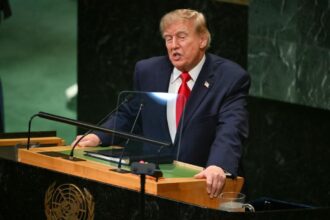
Despite mounting public concern, President Donald Trump has downplayed fears of prolonged inflation, maintaining that the current spike in energy prices will be short-lived. In a statement issued through White House spokesperson Kush Desai, the administration pointed to declining prices in certain sectors—such as prescription drugs and staple goods like eggs—as evidence of underlying economic resilience.
“The American economy remains on a solid trajectory,” the statement read, highlighting tax cuts, deregulation, and energy policies as key factors supporting stability.
Some economists have also pointed to relatively moderate core inflation—which excludes volatile food and energy prices—as a sign that underlying price pressures remain contained. Core inflation rose by 2.6 percent, slightly below market expectations.
Adam Schickling, an economist at Vanguard, noted that the broader inflation picture suggests a temporary shock rather than a structural issue. “Headline inflation is being driven higher by a temporary energy shock, but underneath the surface, core inflation continues to move in the right direction,” he said.
However, the unexpected spike has complicated expectations in financial markets that the Federal Reserve might begin cutting interest rates later this year. Policymakers are now expected to proceed cautiously, weighing the risks of persistent inflation against the need to support economic growth.
Atakan Bakiskan, an economist at Berenberg, warned that central bank officials may be hesitant to label the surge as “transitory,” given past misjudgments following the COVID-19 pandemic.
“Transitory is the hope,” he said, “but officials will think twice before making that call again.”
With global energy markets still volatile and geopolitical tensions unresolved, the outlook for inflation remains uncertain. Analysts agree that the trajectory of consumer prices in the coming months will depend largely on how quickly stability can be restored to oil supply chains and whether diplomatic efforts can ease tensions in the Middle East.
For now, American households, businesses, and policymakers alike are navigating a complex economic landscape shaped by forces far beyond domestic borders.