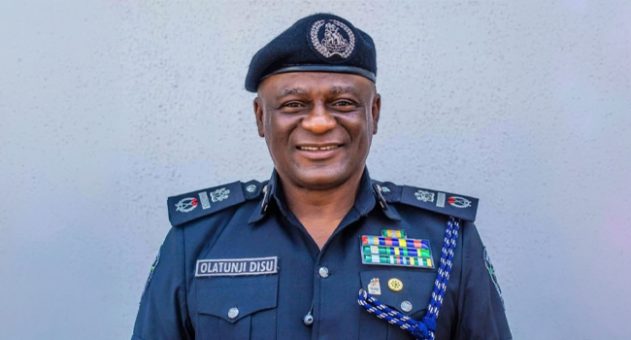
Newly sworn-in Inspector-General of Police, Tunji Disu, on Wednesday inaugurated a high-level committee to examine the proposed establishment of state police in Nigeria, marking a significant step in the country’s ongoing debate on policing reforms and decentralisation of security architecture.
The committee was set up shortly after Disu assumed office as the substantive head of the Nigeria Police Force, reflecting the growing urgency within government circles to address security challenges through structural reforms that would bring policing closer to local communities.
The move follows recent calls by President Bola Ahmed Tinubu for constitutional amendments to enable the creation of state police. During a meeting last week with senators at the Presidential Villa in Abuja, Tinubu urged the leadership of the 10th Senate to begin the legislative process required to decentralise Nigeria’s policing system.
The President argued that Nigeria’s current centralised policing structure had become overstretched in the face of complex security threats, ranging from banditry and kidnapping to communal conflicts and insurgency. According to him, establishing state police would strengthen security at the grassroots and improve the speed and efficiency of responses to emerging threats within individual states.
Tinubu noted that decentralised policing would allow state governments to play a more direct role in maintaining law and order while complementing the work of federal security agencies.
Speaking during the inauguration of the committee in Abuja, Disu explained that the panel had been tasked with conducting a comprehensive review of the concept of state policing and recommending frameworks that would strengthen Nigeria’s internal security system.
He said the committee would examine existing policing models both within Nigeria and in other countries where decentralised policing structures operate successfully.
“Among other responsibilities, the committee is expected to review existing policing models within and outside Nigeria, assess community security needs and emerging risks across the country, propose an operational framework for the establishment and coordination of state police structures, address issues relating to recruitment, training, standards, and resource allocation, and develop robust accountability and oversight mechanisms to ensure professionalism and public trust,” Disu stated.
The Inspector-General emphasised that the proposed system would allow for more community-focused policing that prioritises preventive measures and rapid intervention at the local level.
According to him, state police formations could concentrate on neighbourhood patrols, intelligence gathering, conflict prevention and early response to security threats before they escalate into major crises.
“This collaborative arrangement will encourage specialisation, strengthen professionalism, and ultimately deliver more effective security outcomes for our citizens,” Disu added.
The steering committee is chaired by Professor Olu Ogunsakin, Director-General of the National Institute for Police Studies in Abuja, while Commissioner of Police Bode Ojajuni will serve as the committee’s secretary.
Other members of the panel include Deputy Commissioner of Police Okebechi Agora, Deputy Commissioner of Police Suleyman Gulma, Assistant Commissioner of Police Ikechukwu Okafor, Chief Superintendent of Police Tolulope Ipinmisho and retired Commissioner of Police Emmanuel Ojukwu.
The committee is expected to study a range of critical issues related to the potential establishment of state police, including recruitment procedures, operational guidelines, training standards, funding arrangements and institutional accountability.
Observers say these considerations are essential to addressing longstanding concerns about the risks associated with decentralised policing, including fears that state governors could misuse state police formations for political purposes.
Addressing journalists shortly after his swearing-in as the substantive Inspector-General of Police, Disu revealed that the committee had been constituted specifically to articulate the official position of the Nigeria Police Force on the proposed reform.
According to him, it was important for the police institution itself to participate actively in shaping the conversation around state policing rather than leaving the matter solely to political actors.
“The committee was set up early this morning to look into the issue of state police from the angle of the Nigeria Police,” Disu said.
“We don’t want it to seem as if others are taking decisions while we, who are the most important stakeholders, remain silent. We want to ensure that the best possible framework is developed.”
The Inspector-General also made it clear that the Nigeria Police Force does not see the proposed state police arrangement as a threat to its existence or authority.
Instead, he described it as a complementary partnership that could strengthen security management across the country.
“State police has come to stay, and the police should be able to play their part in ensuring that it succeeds. The police are not afraid. Our jobs are not being taken. It is simply an issue of partnership,” he said.
Disu formally took the oath of office at 2:53 p.m. on Wednesday during a ceremony at the Presidential Villa after the reading of his official citation by the State House Director of Information and Public Relations, Abiodun Oladunjoye.
The ceremony was attended by several top government officials, including Vice President Kashim Shettima, members of the Federal Executive Council and other senior dignitaries.
Also present were the Secretary to the Government of the Federation, Senator George Akume; the National Security Adviser, Nuhu Ribadu; and the Chief of Staff to the President, Femi Gbajabiamila.
Others in attendance included the Minister of Police Affairs, Senator Ibrahim Gaidam; the Minister of the Federal Capital Territory, Nyesom Wike; and the Head of the Civil Service of the Federation, Mrs. Esther Walson-Jack.
Disu’s confirmation as the nation’s police chief came barely a week after President Tinubu appointed him acting Inspector-General following the resignation of his predecessor, Kayode Egbetokun, on February 23, 2026.
Security analysts say the inauguration of the committee signals the federal government’s readiness to seriously explore the creation of state police, a proposal that has been debated for decades in Nigeria’s political and security circles.
Supporters argue that decentralised policing would enhance community participation in security management and help address Nigeria’s diverse and localised security challenges.
However, critics caution that strong legal safeguards and oversight mechanisms will be required to prevent potential abuse and ensure that any state police system operates within the bounds of the law and democratic accountability.
As the committee begins its work, stakeholders across the country will be watching closely to see whether its recommendations could pave the way for one of the most significant security reforms in Nigeria’s recent history.