The Abia State Government has commenced a comprehensive process to recover, rehabilitate, and fully utilise abandoned and underperforming farm settlements across the state, as part of a broader strategy to reposition agriculture as a major driver of economic growth, employment, and food security.
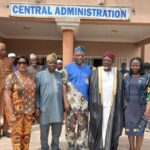
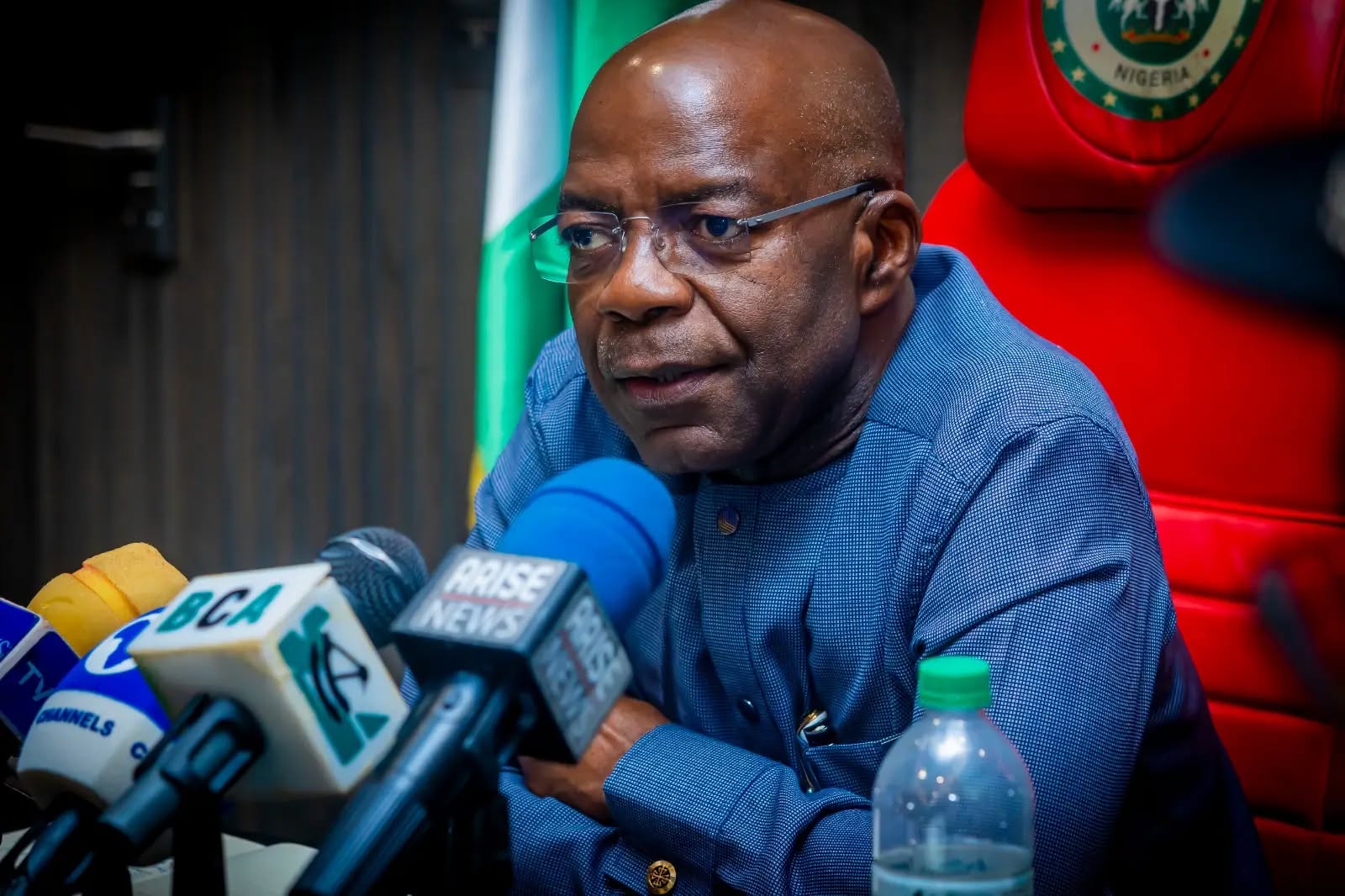
Governor Alex Otti, OFR, disclosed this on Tuesday while receiving a delegation of the Executive Management Committee of the Anambra–Imo River Basin Development Authority, led by its Chairman, Senator Emmanuel Anosike, who paid him a working visit at the Government House.
Speaking during the meeting, Governor Otti reaffirmed that agriculture remains the backbone of Nigeria’s economy and stressed that Abia State is deliberately transitioning from subsistence farming to a modern, commercial, and mechanised agricultural system anchored on a strong value chain.
According to the Governor, several farm settlements established decades ago by visionary leaders such as the late Premier of Eastern Nigeria, Dr. Michael Okpara, have either been abandoned or grossly underutilised over the years, depriving the state of their immense economic potential.
“I can assure you that we have virtually all the data we require. Some of these farm settlements were set up by our forefathers, the Michael Okparas of this world, and were subsequently abandoned or underutilised,” Governor Otti said. “We have started the process of taking them back, setting them up, and getting them to work again.”
He noted that agriculture, more than any other sector, has the capacity to employ the highest number of people, not only in Nigeria but across Africa, making it a critical tool for addressing unemployment and poverty.
“Agriculture, anyhow you look at it, is the highest employer of labour. Not just in Africa, but in Nigeria. That is why we are working on transiting from the kind of agriculture we call subsistence farming to commercial and mechanised farming with a full value chain,” the Governor explained.
Using cocoa production as an illustration, Governor Otti stressed the need for value addition rather than the export of raw agricultural produce.
“Instead of selling cocoa beans, we want to be able to sell chocolate,” he said, underscoring the administration’s commitment to agro-processing, industrialisation, and export-oriented agriculture.
Governor Otti assured the visiting delegation of his readiness to work closely with the Anambra–Imo River Basin Development Authority to achieve food sufficiency, expand irrigation farming, and grow Abia State’s economy.
“I want to reassure you that we will be very pleased to work collaboratively with you and your team. Of course, we have land. So we will just form a team and engage with you,” he stated.
He emphasised the urgency of action, directing that the collaboration should begin immediately with projects that can deliver quick results.
“I want us to hit the ground running, because there is no time. Once you identify the low-hanging fruits, let us start from there, and then we can move on to a few more complicated areas,” the Governor added.
To ensure effective coordination, Governor Otti directed the Commissioners for Agriculture, Lands, and Power and Public Utilities, along with other relevant Ministries, Departments, and Agencies, to be part of a joint team that would work with the Anambra–Imo River Basin Development Authority.
He further highlighted the critical role of electricity in agricultural and industrial development, noting that his administration has made significant investments in the power sector but remains unsatisfied.
“We have done so much in the area of power, and we are not yet satisfied. We are still moving because we believe that power is central to virtually everything we are doing,” Governor Otti said.
In a personal note, the Governor acknowledged the long-standing support he has received from Senator Emmanuel Anosike since 2014, when he joined partisan politics, and commended him for his commitment and encouragement over the years.
Earlier in his remarks, Senator Emmanuel Anosike explained that the delegation was in Abia State to formally present themselves to the Governor as a newly inaugurated board appointed by President Bola Ahmed Tinubu and to express their willingness to partner with the state government in agricultural development and other strategic areas.
He disclosed that Nigeria has 12 River Basin Development Authorities, with the Anambra–Imo River Basin Development Authority covering the five states of the South-East geopolitical zone.
“We have decided to visit all the Governors that we are covering. Today, we came to the Abia State Governor to discuss collaboration between the Anambra–Imo River Basin and the State Government,” Senator Anosike said.
He noted that the Authority owns vast tracts of land suitable for large-scale agriculture and is already collaborating with the South East Development Commission to develop many of these locations.
“We own the land, and we have so much land to use for agriculture. The South East Development Commission is working with us to develop most of those places,” he explained.
Senator Anosike recalled that the Anambra–Imo River Basin once had thriving agricultural brands such as Anambra–Imo rice, poultry, and egg production, supported by robust irrigation systems, including projects located in Abia State.
“We have a strong irrigation project in Abia. Before now, we used to have Anambra–Imo rice, Anambra–Imo chicken, Anambra–Imo eggs, and so on,” he said, expressing optimism that such successes could be revived through renewed partnerships.
Beyond agriculture, the Chairman revealed that the Authority is also involved in renewable energy initiatives, including solar power projects, which could further support agricultural processing and rural development.
“Apart from agriculture, we are also into solar panels and other areas. There are many places where we can collaborate to bring development closer to Abia,” Senator Anosike added.
The working visit was attended by key officials of the Abia State Government, including the Acting Secretary to the State Government, the Chief of Staff to the Governor, Commissioners for Agriculture, Power and Public Utilities, and Lands, as well as the Director General of Public-Private Partnerships and Investment Promotion.
Also present were the Director General of the Greater Aba Development Authority, the Director General of the Greater Ohafia Development Authority, the General Manager of the Umuahia Capital Development Authority, and other senior government officials.
The engagement underscored the Abia State Government’s renewed focus on agriculture-led development, strategic partnerships, and the revitalisation of legacy public assets to drive inclusive growth and sustainable economic transformation.
By Ctz. Ukoha Njoku Ukoha
Chief Press Secretary to the Executive Governor of Abia State
January 20, 2026