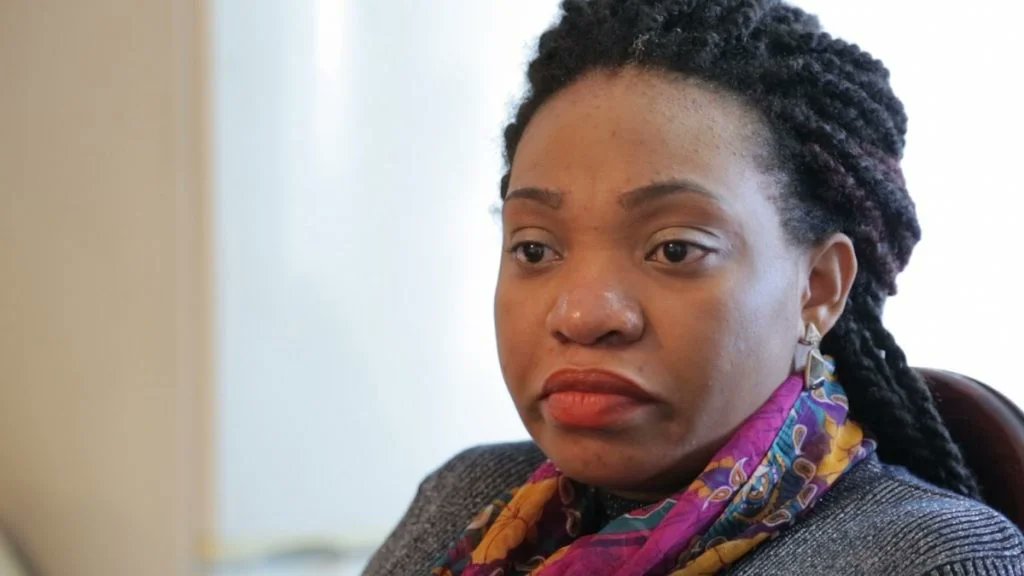
Uchechi Kanu, wife of the detained leader of the Indigenous People of Biafra (IPOB), Nnamdi Kanu, has said her husband is confronting forces “far darker” and more sinister than those Nelson Mandela battled during the apartheid struggle in South Africa. She made the assertion in a passionate message posted on X (formerly Twitter), where she defended the IPOB leader, insisting that he is not a terrorist but “the greatest African freedom fighter” of his time.
Her comments come amid renewed concerns over Kanu’s prolonged imprisonment and the political tensions surrounding his trial. The IPOB leader is currently serving a life sentence at the Sokoto Custodial Centre after being convicted by Justice James Omotosho of the Federal High Court in Abuja on terrorism-related charges tied to his agitation for the creation of an independent Biafran state.
In her message, Uchechi emphasised that her husband’s struggle has been misunderstood and misrepresented, especially by those she described as enemies of truth and justice. She argued that accusing Nnamdi Kanu of terrorism is part of a calculated attempt to silence a man whose only “crime” is advocating for the rights and dignity of his people.
Related posts:
- Nnamdi Kanu’s legal team decries bias, irregularities, and denial of fair hearing in court
- South-East Academic Doctors Condemn Life Imprisonment Verdict, Demand Immediate Release of Nnamdi Kanu
- Bianca Ojukwu calls for calm, dialogue after Nnamdi Kanu’s conviction
- Traditional Rulers in Umuahia Demand Presidential Pardon and Release of Nnamdi Kanu
“The Igbo youths and students are in solidarity with Mazi Nnamdi Kanu. Nnamdi Kanu is not a terrorist,” she declared. “Although no human being is perfect, he loves his people and his people love him. Many are willing to protect him with their last breath.”
Drawing parallels between Kanu’s ordeal and Nelson Mandela’s historic struggle, Uchechi said Mandela had the advantage of dealing with opponents who, despite the brutality of apartheid, were still capable of reasoning. By contrast, she claimed Kanu is confronting adversaries who operate with far more ruthless intent.
“Nelson Mandela fought in the arena of apartheid with those who were amenable to reasoning, despite its brutality. Mazi Nnamdi Kanu, however, fights in the arena against forces far more darker,” she wrote, suggesting that the scale and nature of the resistance against Kanu surpass what the anti-apartheid icon encountered.
Her remarks have added a new dimension to ongoing public discourse about Kanu’s incarceration, the Nigerian government’s handling of separatist movements, and the wider question of ethnic tensions in the country. Among IPOB supporters and sympathisers across the South-East and the diaspora, the comparison to Mandela has resonated strongly, feeding into a narrative that positions Kanu as a martyr for self-determination.
Uchechi also highlighted the emotional and psychological burden borne by the IPOB leader, noting that even under immense pressure, Kanu continues to command the loyalty of millions of Biafrans scattered across the world. “He is the greatest African freedom fighter that exists and the leader of millions of Biafrans all over the world under the IPOB umbrella,” she wrote.
The statement has sparked varied reactions. While supporters see it as a powerful reminder of Kanu’s perceived heroism, critics argue that equating his struggle with Mandela’s oversimplifies complex political realities and risks inflaming tensions. Some analysts caution that such statements may further polarise opinion at a time when peace efforts and dialogue are urgently needed.
Nnamdi Kanu’s legal troubles began in 2015 when he was first arrested on multi-count charges, including treasonable felony. His release on bail in 2017 did little to calm tensions, as clashes between IPOB members and security operatives escalated. After fleeing the country during a military operation in Abia State, Kanu resurfaced years later before being rearrested abroad in 2021 and brought back to Nigeria. The circumstances of his extradition remain controversial and are the subject of ongoing legal and diplomatic debate.
His conviction and subsequent transfer to the Sokoto facility have further intensified concerns from human rights groups, political observers, and international watchdogs. Many have argued that the Nigerian government should pursue a political, rather than purely judicial, solution to the Biafran agitation.
For now, Kanu’s supporters continue to rally behind him, staging protests, issuing statements, and mounting social media campaigns demanding his release. Uchechi’s latest message is likely to strengthen these efforts, as she positions her husband as a symbol of resistance against oppression.
As the controversy deepens, the Federal Government has maintained its stance that IPOB’s activities constitute a threat to national security, insisting that the rule of law must prevail. Meanwhile, leaders in the South-East continue to appeal for political negotiation to avoid further destabilisation of the region.
With emotions running high and tensions far from resolved, Nnamdi Kanu remains at the centre of one of Nigeria’s most divisive and consequential political struggles — a fight his wife insists is not just political, but existential.