Former Anambra State Governor and 2023 presidential candidate of the Labour Party, Mr. Peter Obi, has once again drawn national attention to the role of education and social responsibility in governance, following his intervention to pay examination fees for 148 inmates across correctional centres in Anambra State who participated in the November/December 2025 National Examinations Council (NECO) General Certificate Examination (GCE).
In addition to the education support for inmates, Obi also donated the sum of ₦15 million to the College of Nursing Sciences, Borromeo, Onitsha, to assist the institution with infrastructure upgrades and the enhancement of healthcare training, reinforcing his long standing advocacy for investment in human capital development.
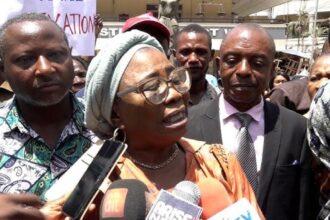
Obi’s support for the inmates was formally concluded during an unscheduled visit to the NECO state office in Awka, where he presented a cheque covering the full cost of the examination fees. The Anambra State Coordinator of NECO, Mrs. Emilia Njoku, who received the former governor, expressed surprise at the visit and commended the gesture, describing it as both timely and impactful.
According to Obi, the intervention followed an appeal from inmates in various correctional centres in the state who had registered for the NECO GCE but faced the risk of being excluded from the examination due to their inability to pay the required fees. He explained that the inmates, acting through a delegate, reached out to him after learning that despite NECO’s approval for their participation, payment of the examination fees remained a critical hurdle.
“When the delegation approached me, I felt bad that they were going to be stopped from continuing the examination,” Obi said. “Education is too important to be denied to anyone, regardless of their circumstances. I immediately assured them that I would pay the fees so that they could sit for the examination without interruption.”
He disclosed that shortly after making the commitment, some of his friends and associates in the diaspora also expressed interest in supporting the initiative. According to him, they contributed funds towards the payment and pledged to sustain the support in subsequent years, especially for inmates who demonstrate commitment to education and personal development.
Further explaining the process, Obi revealed that representatives of inmates from correctional centres in Awka, Onitsha, Nnewi and Aguata, also known as Ekwulobia, had earlier visited his residence in Onitsha to explain their predicament in detail. Although NECO had granted approval for the inmates to register and sit for the examinations, the council required a formal letter of undertaking from a guarantor before payment could be processed.
“I provided the required undertaking immediately,” Obi explained. “Afterwards, I came personally to submit the cheque formally because I believe in following due process and ensuring that commitments are honoured transparently.”
The cheque presented by Obi amounted to ₦4,741,400, covering the examination fees for all 148 inmates. A breakdown of the beneficiaries shows that 50 inmates were from the Awka correctional centre, 36 from Onitsha, 25 from Nnewi and 37 from Aguata. Each candidate’s examination fee was ₦30,050, with an additional ₦2,000 per inmate included to cater for logistics and administrative costs.
Commending the gesture, Mrs. Njoku described education as a fundamental necessity that should not be denied to any segment of society. She stressed that inmates, in particular, deserve access to educational opportunities as part of their rehabilitation and reintegration into society.
“Education is critical to personal development and social reform,” she said. “When inmates are given the opportunity to learn and acquire qualifications, it enhances their chances of becoming productive members of society after serving their sentences. This intervention is highly commendable and aligns with the rehabilitative objectives of the correctional system.”
The initiative has also been viewed by observers as a practical demonstration of Obi’s long held belief that investment in education is one of the most effective tools for reducing poverty, crime and social inequality. Throughout his political career, Obi has consistently advocated for increased funding for education, healthcare and other sectors that directly impact human development.
Meanwhile, Obi’s donation of ₦15 million to the College of Nursing Sciences, Borromeo, Onitsha, further underscored his commitment to strengthening healthcare institutions and improving training standards for medical professionals. Speaking on the donation, Obi said the support was part of his routine contributions to medical and educational institutions, aimed at improving infrastructure and enhancing the quality of training.
According to him, a strong healthcare system is impossible without well trained professionals and adequately equipped institutions. He noted that nursing schools play a critical role in producing frontline healthcare workers who are essential to improving healthcare delivery, especially at the community level.
The management of the College of Nursing Sciences reportedly welcomed the donation, describing it as a significant boost at a time when many training institutions are grappling with funding challenges and rising costs of maintaining modern educational and medical facilities.
Across Anambra State and beyond, Obi’s twin interventions have continued to generate public discourse on the responsibility of leaders and private citizens to support vulnerable groups and critical institutions. Supporters argue that such actions demonstrate how targeted interventions can make immediate and tangible impacts, particularly in areas such as education, healthcare and rehabilitation.
As the 2025 NECO GCE results are awaited, the beneficiaries of the intervention are hopeful that the opportunity afforded them will serve as a turning point in their lives. For many of the inmates, the examinations represent not just an academic milestone, but a pathway to self improvement and a chance at a better future upon release.
In the broader context, the initiative has reinforced calls for a more inclusive approach to education and social development in Nigeria, one that ensures no individual is left behind due to circumstance or institutional barriers.